اوقات Awqāt [iOS][app][SwiftUI][spiritual]

Awqāt reimagines Islamic prayer time software through a dynamic visualization that maps twilight, sunrise, zenith, and sunset to location-based prayer schedules. The design translates complex data into an intuitive, easy to use interface. It is the most beautiful Islamic prayer time app on the App Store.

Impact:600+ downloads across 58 countries · 13.2K+ unique sessions

Role:Product Design, Visual & Interaction Design, SwiftUI Development (AI-assisted), UX Research, Competitor Analysis, Ethnographic Studies

Collaborators:Self-published

Link: apps.apple.com

Why

Most Islamic prayer time apps treat sacred time like a utility — cluttered with ads, aggressive upsells, and countdown-driven interfaces that strip away the spiritual dimension of prayer.

How

A dynamic visualization that maps twilight, sunrise, zenith, and sunset to prayer schedules — reconnecting users to the ancient method of reading the sky, designed and shipped as a solo iOS app.

Impact

600+ downloads across 58 countries · 13.2K+ unique sessions

I set out to build a prayer time app that treated the spiritual dimension of prayer seriously — not as a utility, but as a daily relationship with time.

Awqāt reimagines prayer time software through a dynamic visualization that maps twilight, sunrise, zenith, and sunset to location-based prayer schedules. The design translates complex astronomical data into an intuitive, easy to use interface.

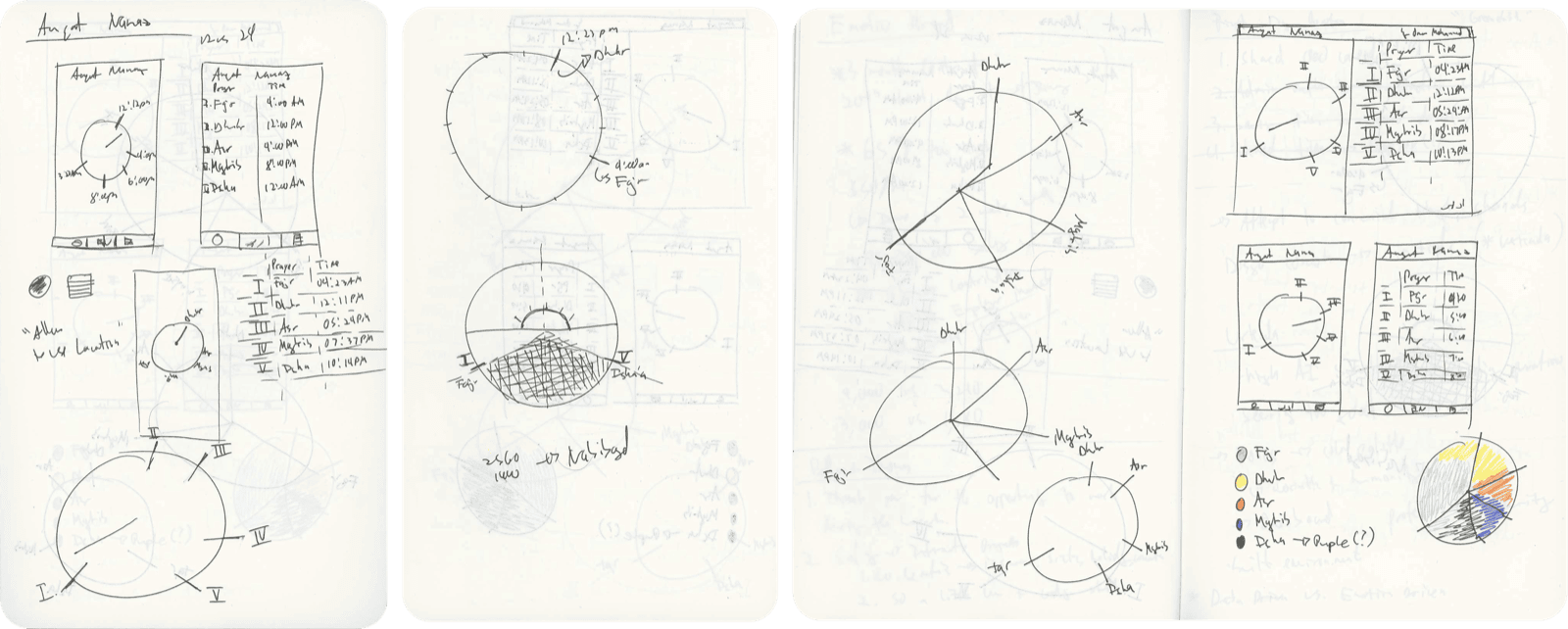
Four notebook pages of early hand-drawn explorations — circular sun-arc diagrams mapping the five prayer times to positions along the horizon, with rough UI layouts and annotation notes.

Most existing prayer apps treat sacred time like a countdown rather than a mindful, spiritual moment.

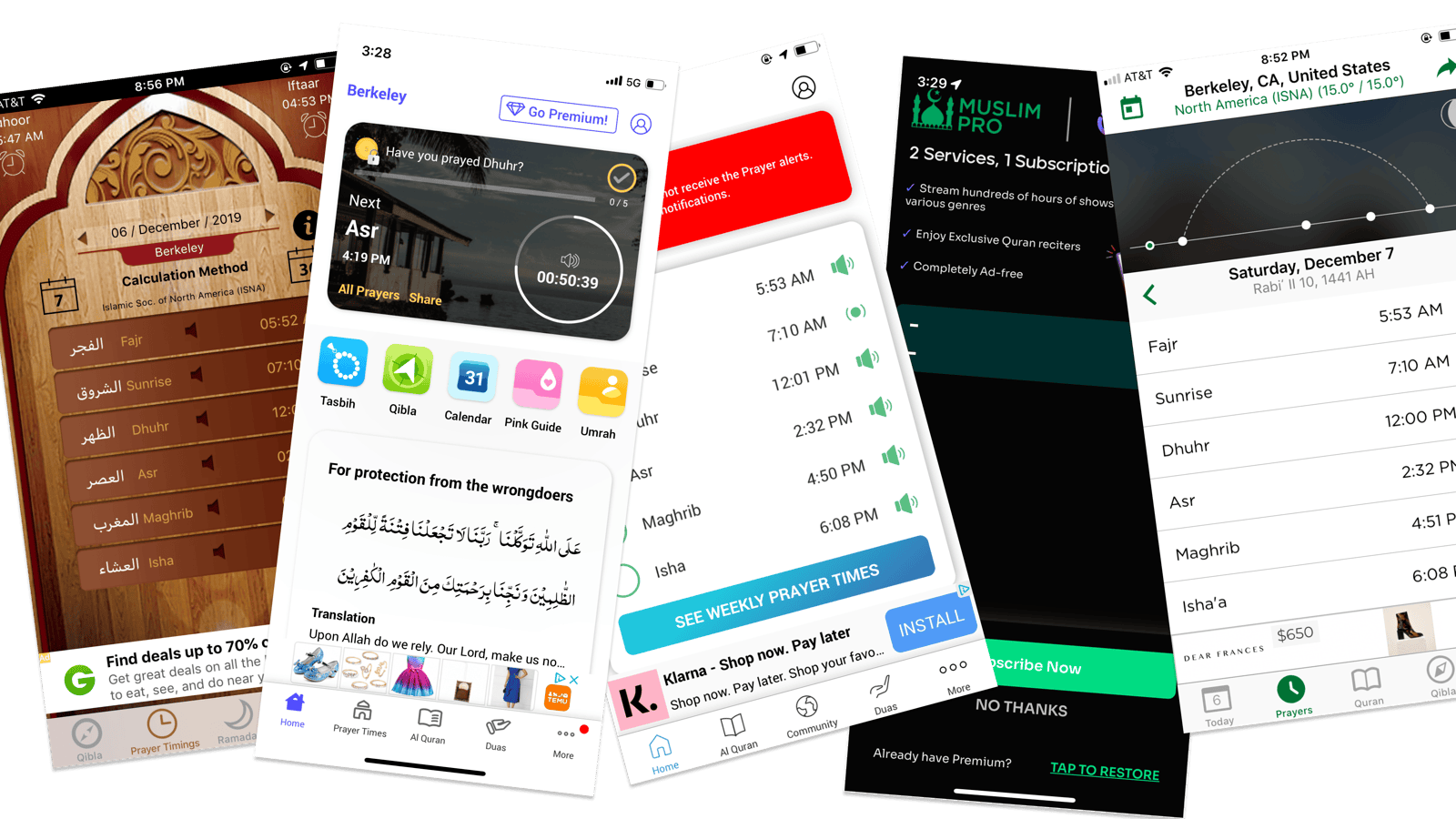
A survey of the most popular prayer apps showing cluttered interfaces, aggressive upsell prompts, and countdown-focused timers that treat prayer as a task to be checked off.

The most popular apps run ads and aggressive upgrade tactics — locked features, pop-ups, and upsells that interrupt the experience.

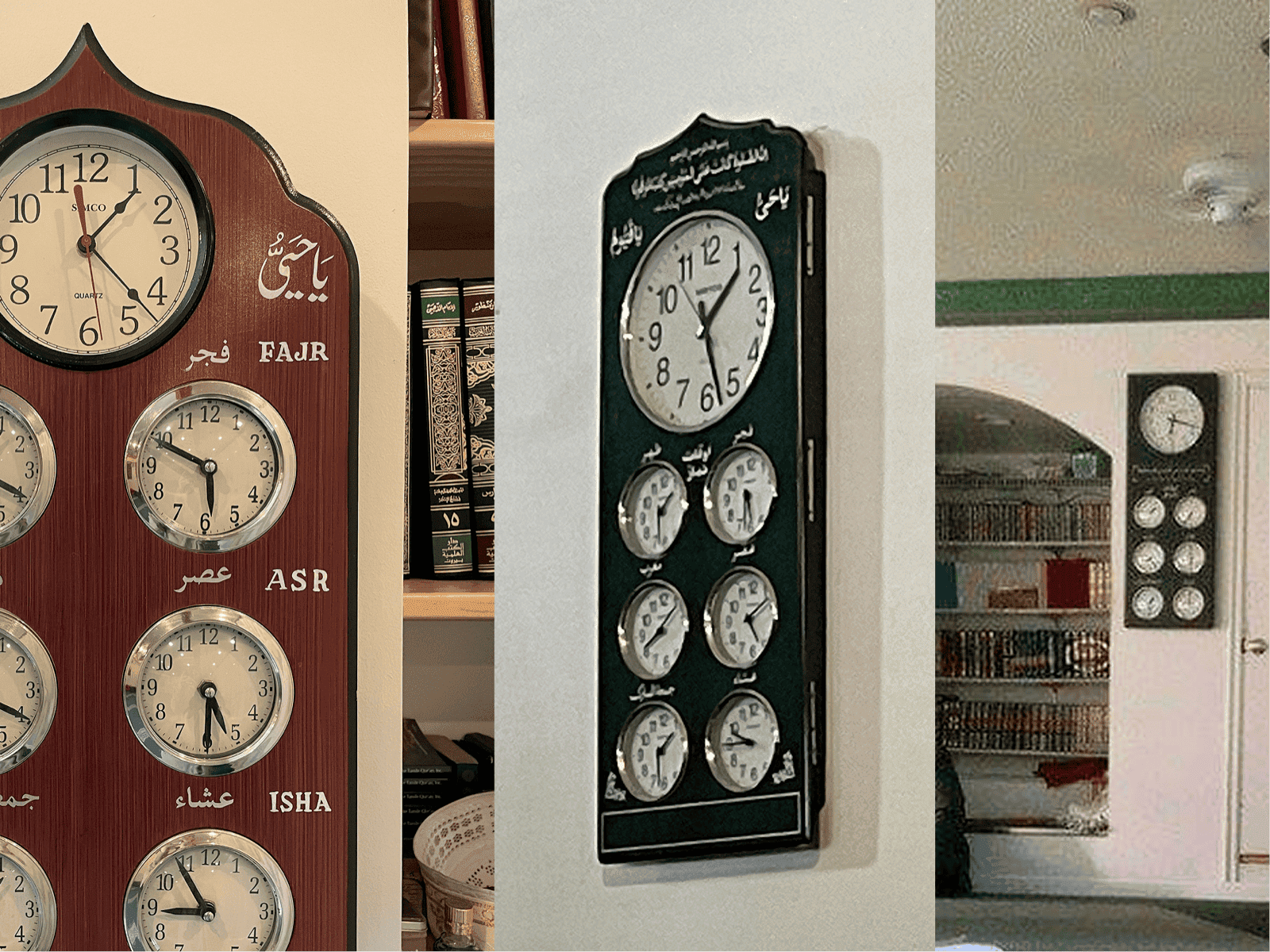
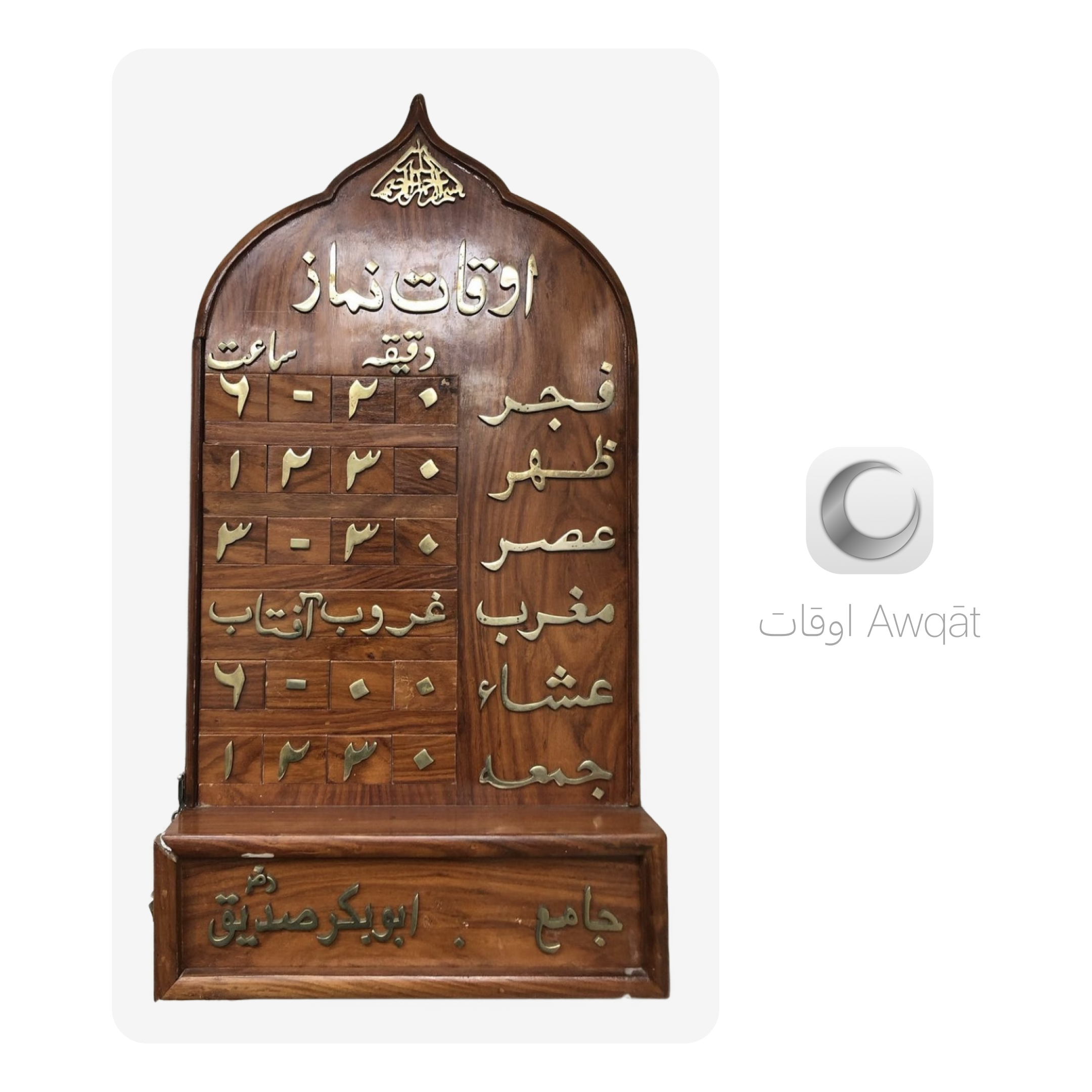
Analog prayer time clocks in mosques — minimal, readable, and aesthetically considered — which became the visual and functional reference point I kept returning to.

Analog clocks in mosques placed an emphasis on function, form, and aesthetics — that became the reference point I was looking for.

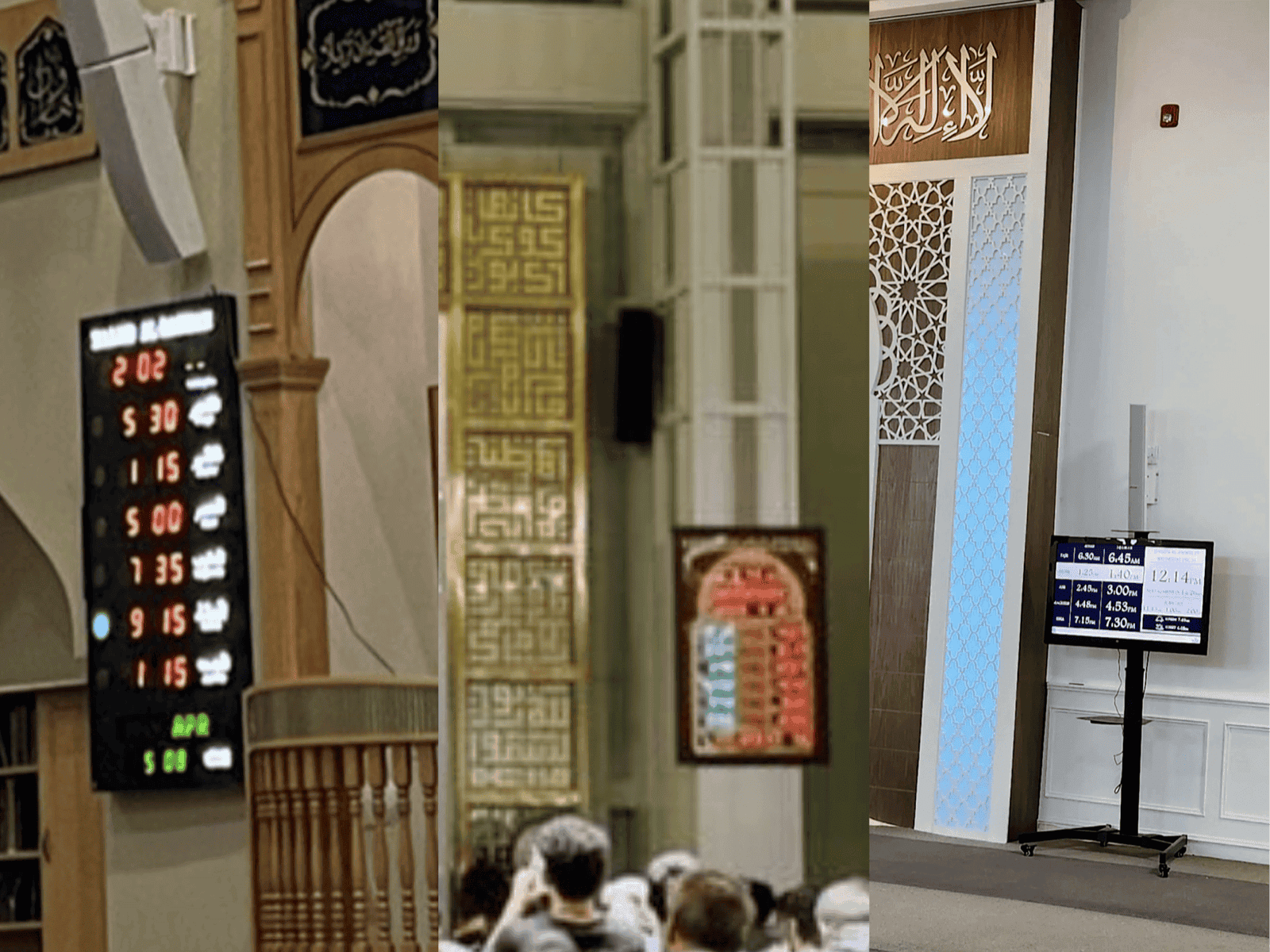
Digital prayer time screens in mosques showing a lack of aesthetic harmony with surrounding architecture, revealing the gap between how Muslims experience prayer and how software represents it.

I found the design opportunity in the ancient method itself: the sun.

By visualizing what is actually happening in the sky, the sun’s position along the horizon becomes the user interface for denoting the prayer times, connecting the user back to the original method of looking at the sky and allowing the sun and the horizon to provide contextual awareness to the prayer times.

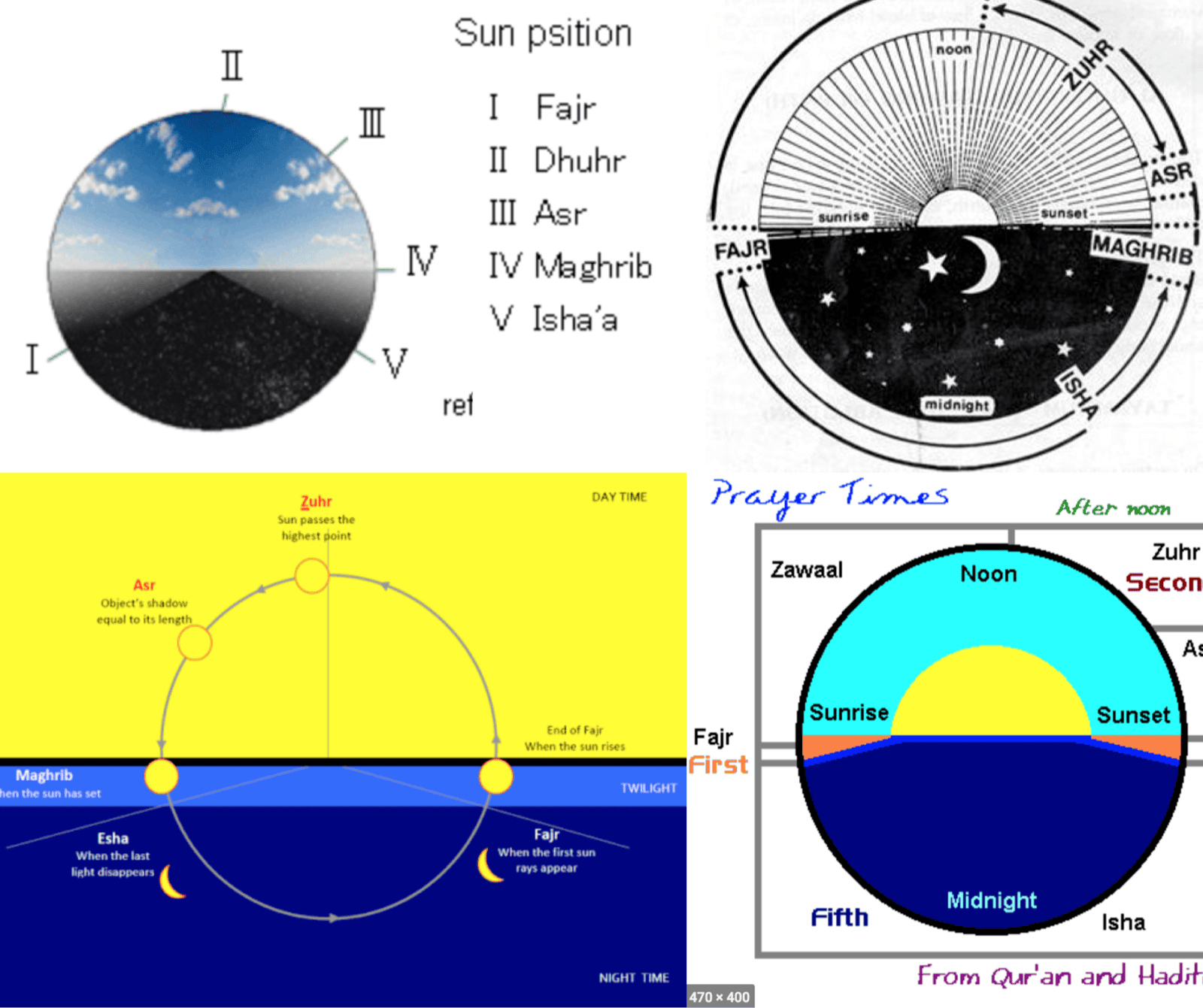
Diagrams pairing civil, nautical, and astronomical twilight with the five daily prayer times, mapping the sky's natural transitions directly to the moments of prayer.

Precision timing and universal calculation methods for multiple schools of thought.
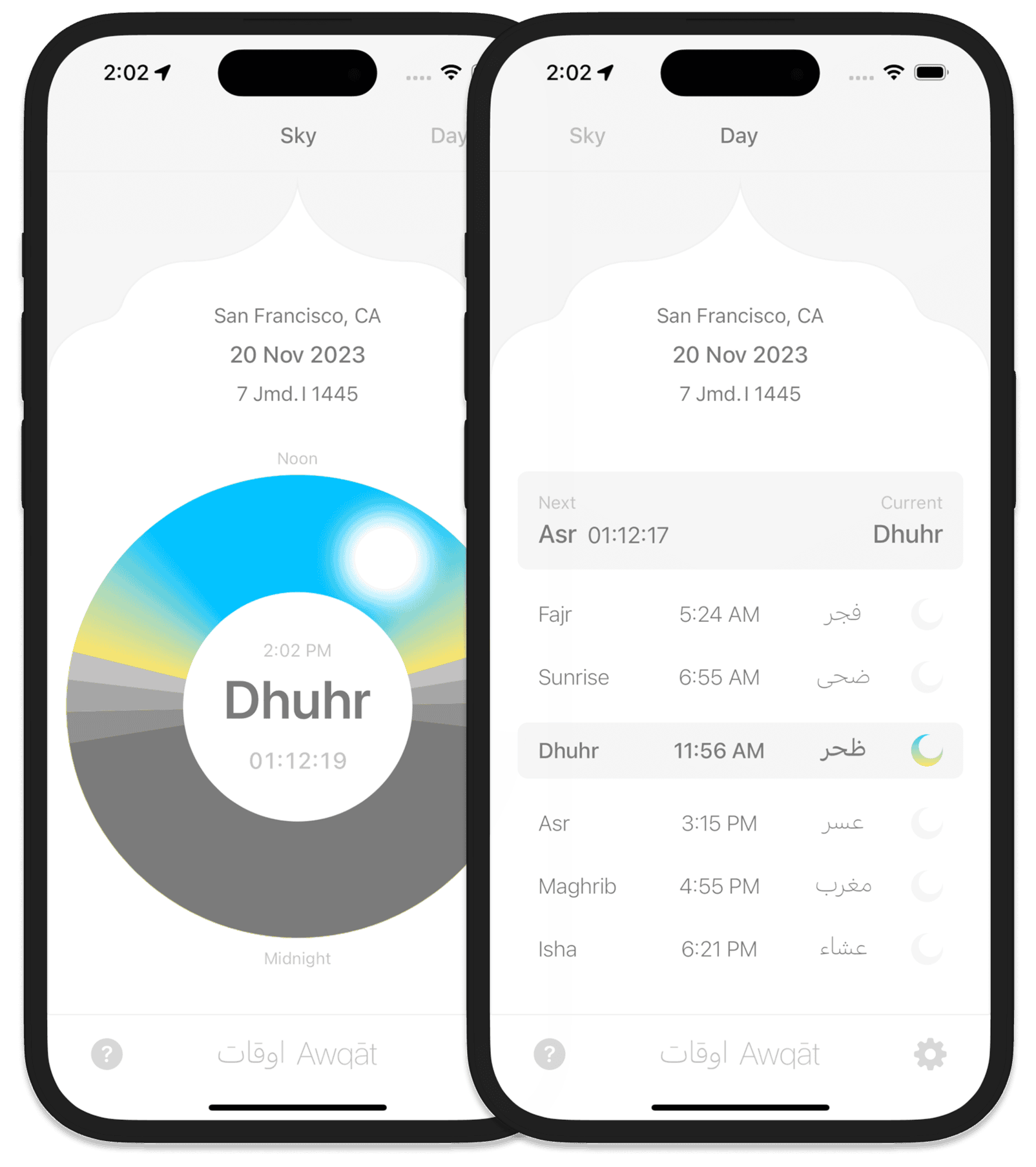
Side-by-side iPhone screenshots of the Sky and Day views — the circular arc visualization showing the sun's position and current prayer on the left, the full prayer time list with Arabic names on the right.

I designed every screen in Figma and built the app in Xcode using LLM-assisted SwiftUI.
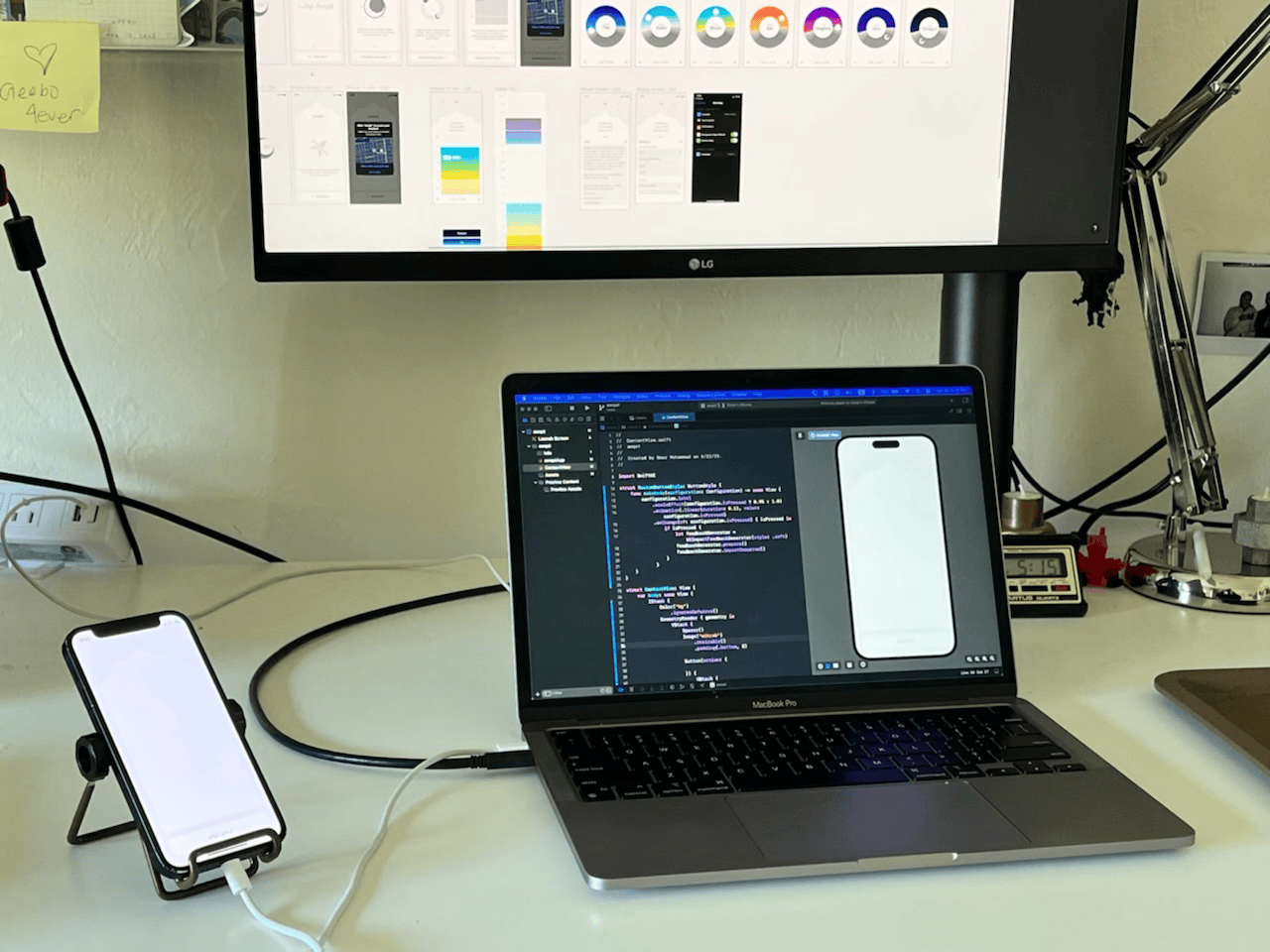
The solo development setup — Xcode with SwiftUI code on the MacBook, the live app running on an iPhone, and the Figma design file visible on an external monitor above.

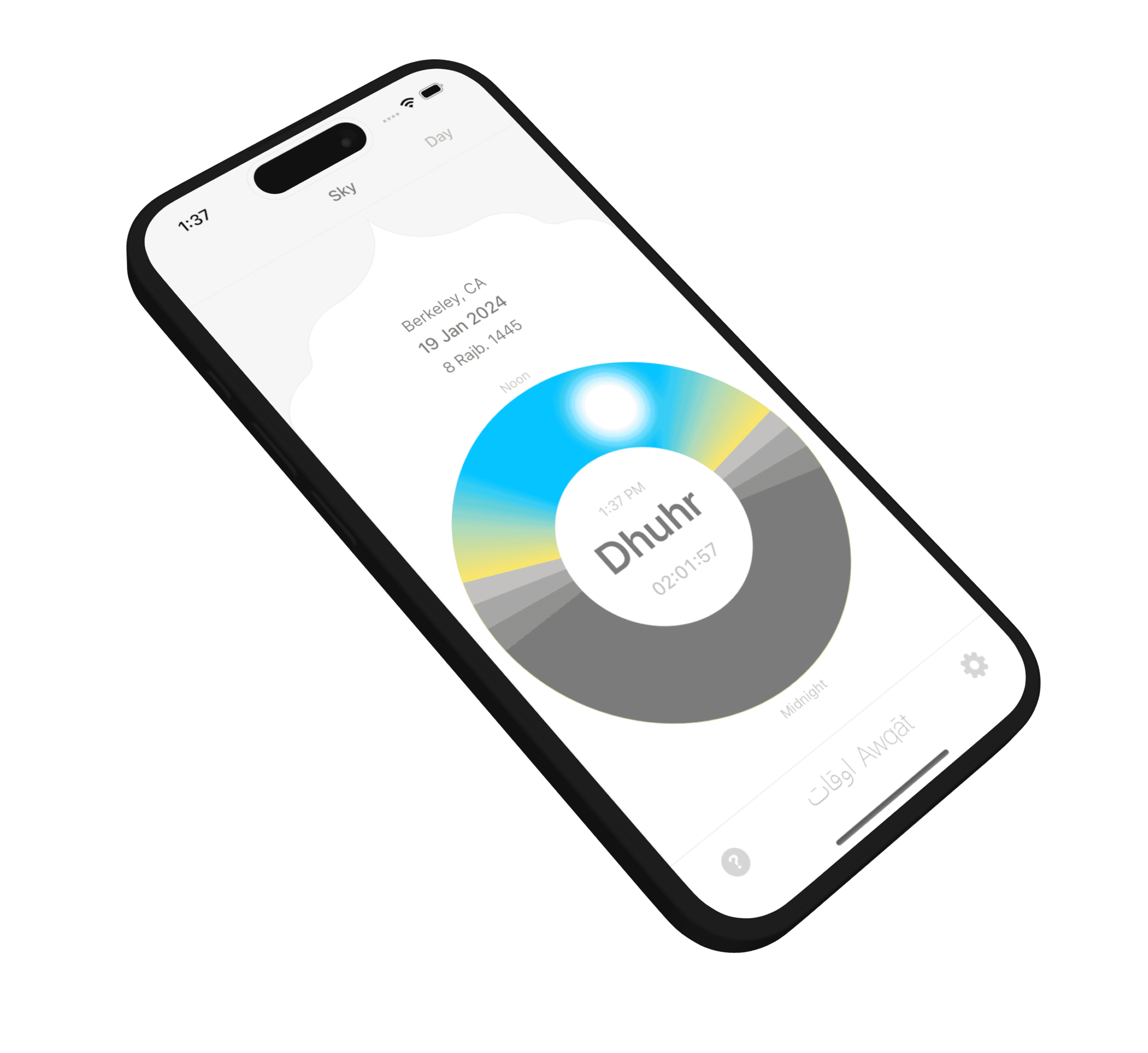
Marketing render of the Sky view on a tilted iPhone, showing Dhuhr as the current prayer at 1:37 PM with the sun at its zenith in the gradient arc visualization.

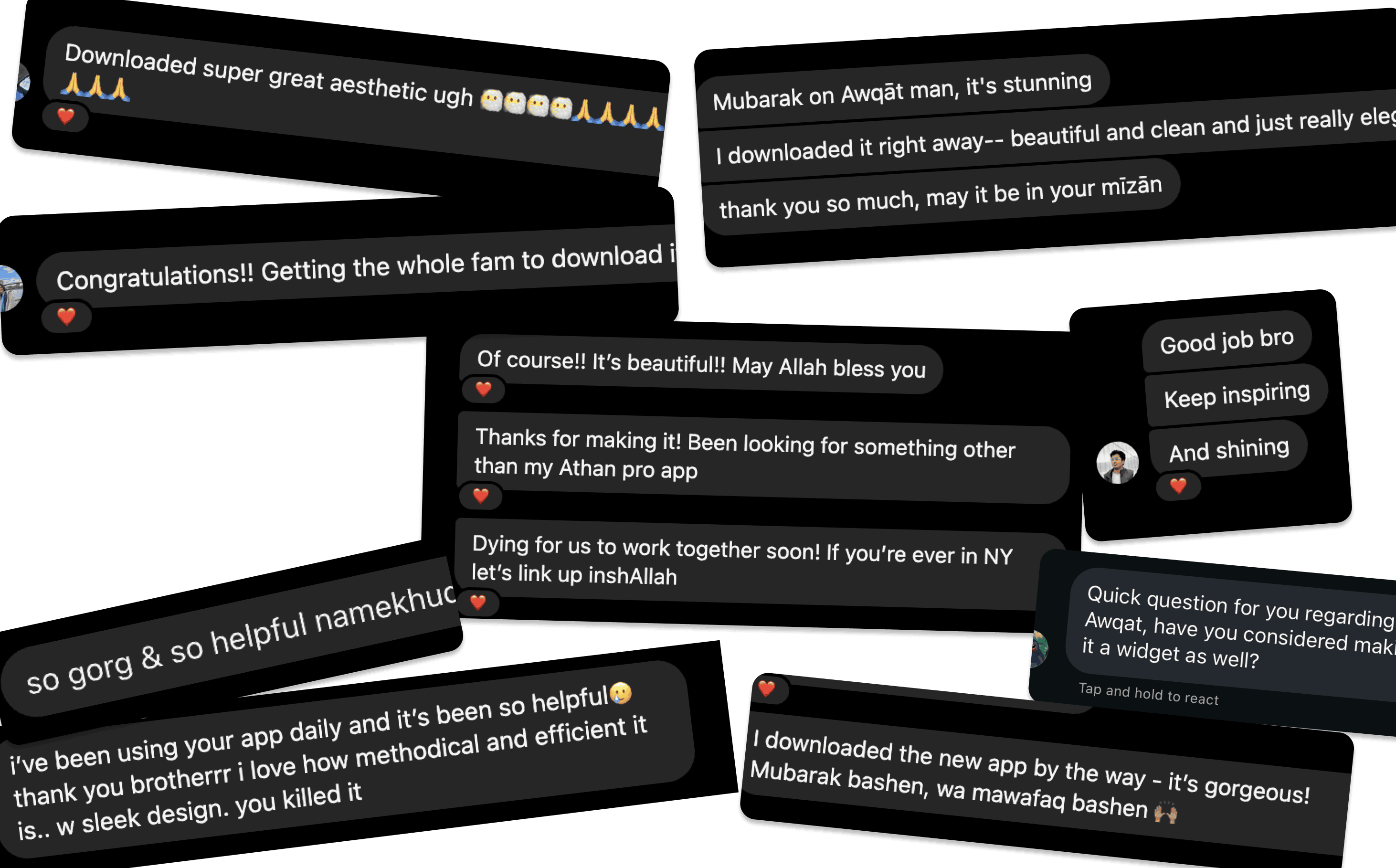
The response from the Muslim community was immediate and warm.

A collage of direct messages after launch — users calling it "stunning," "gorgeous," "beautiful and clean," and "so helpful," with reactions in Arabic and English from across the world.

Awqāt reached 600+ downloads across 58 countries and 13.2K+ unique sessions — designed, built, and shipped entirely by me.

🇺🇸🇩🇪🇨🇦🇦🇺🇮🇳🇫🇷🇬🇧🇲🇦🇵🇰🇹🇷🇩🇰🇪🇬🇦🇪🇸🇦🇦🇫🇩🇿🇹🇳🇧🇪🇨🇭🇧🇫🇮🇹🇳🇱🇱🇰🇸🇪🇺🇦🇫🇮🇯🇴🇸🇳🇭🇺🇮🇩🇮🇶🇯🇵🇲🇾🇦🇹🇦🇿🇧🇭🇧🇷🇧🇬🇨🇱🇨🇳🇭🇰🇰🇿🇽🇰🇱🇧🇱🇾🇳🇿🇳🇬🇳🇴🇴🇲🇵🇭🇵🇱🇵🇹🇷🇺🇸🇬🇪🇸🇺🇿