Online Letterform Archive
Impact:102K active users · 3M+ page views · 4 min avg. engagement time
Role:Product Design, Design Engineer, Prototyping, User Research
Collaborators:Jon Sueda (Graphic Designer), Chris Hamamoto (Designer/Developer), Amelia Grounds (Librarian), Stephen Coles (Associate Curator & Editorial Director), Kate Long Stellar (Collections Director), Murray Grigo-McMahon (Data Engineer)
Links: oa.letterformarchive.org , letterformarchive.org , letterformarchive.org
Why
Most digital archives flatten everything into uniform grids so that the physicality of objects, their scale, weight, and texture gets lost. Browsing these archives feel like searching, and the joy of discovery disappears.
How
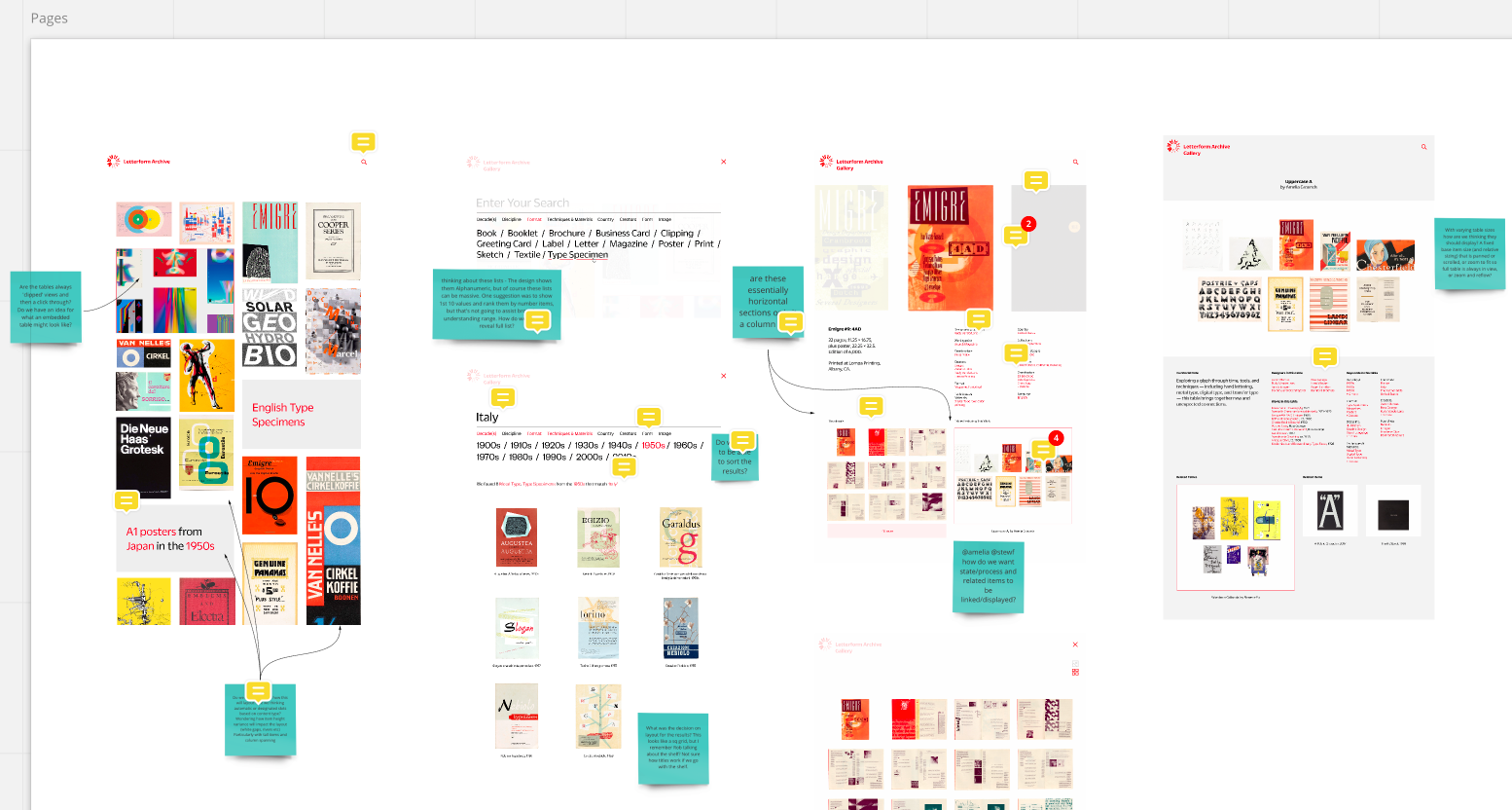
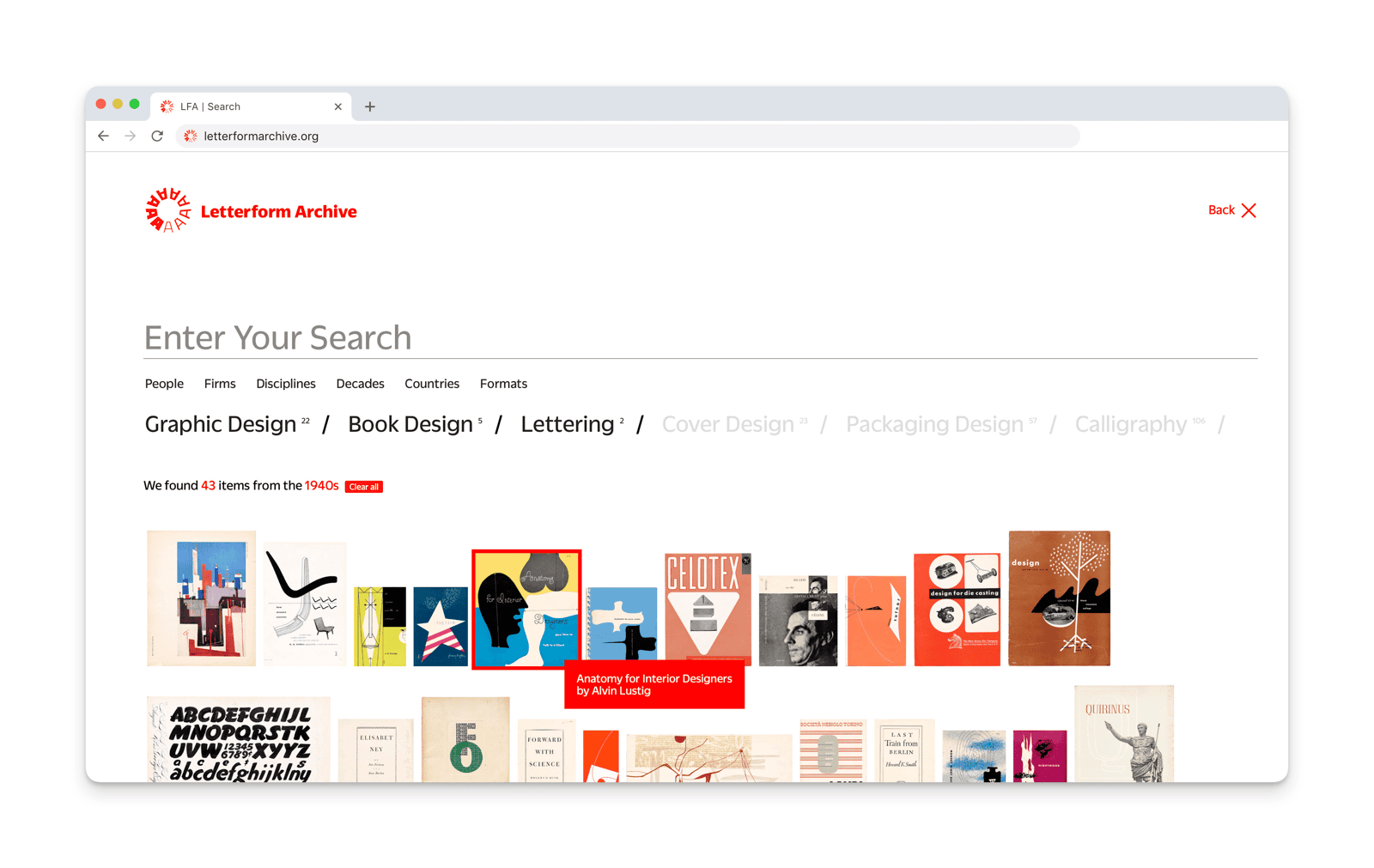
A discovery tool where filtering encourages exploration, objects are sized proportionally to real-world dimensions, and high-fidelity imaging allows for detailed visual research.
Impact
102K active users · 3M+ page views · 4 min avg. engagement time
We began by surveying designers to understand how they actually browse, filter, and discover in a graphic design collection.
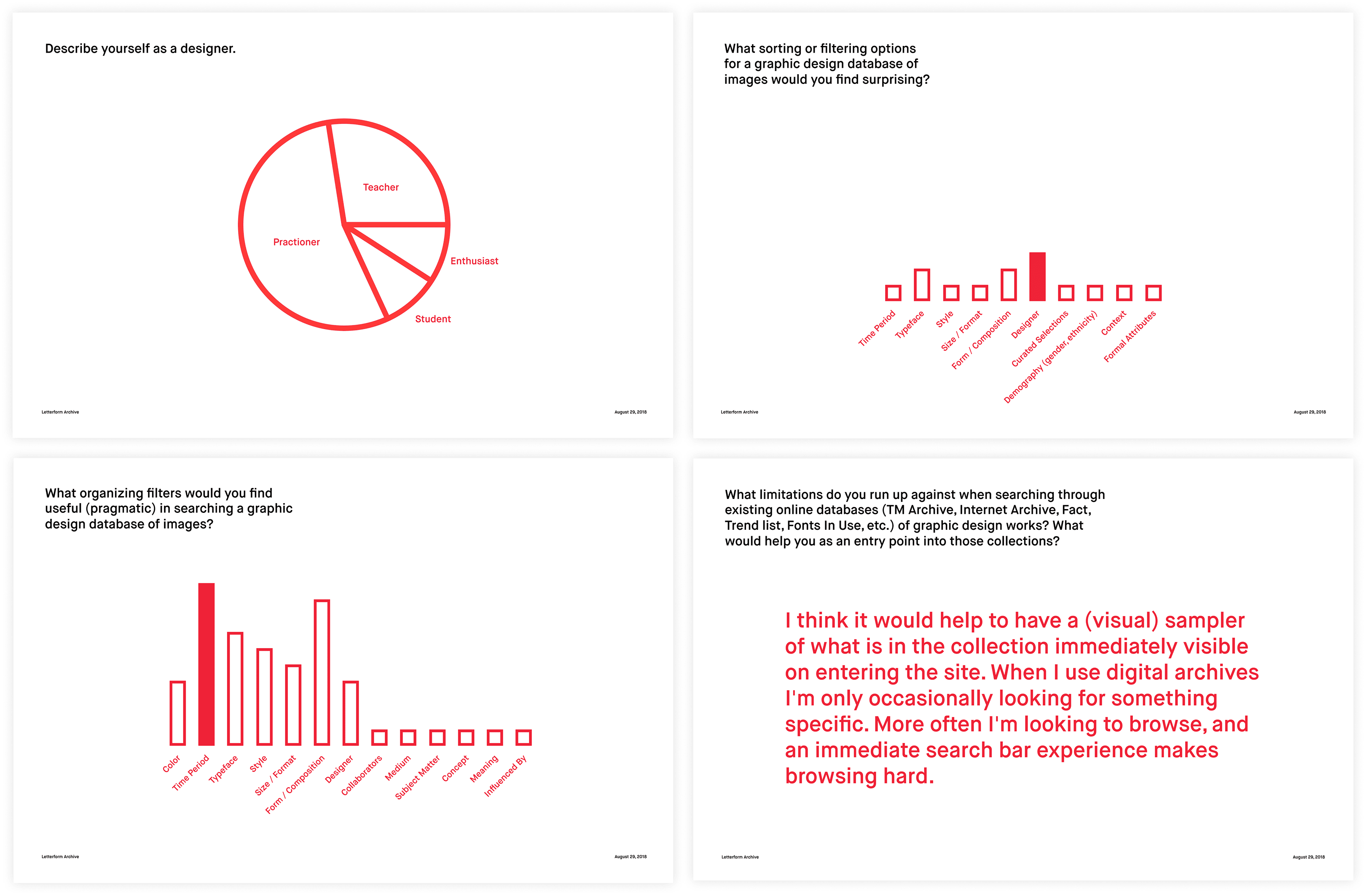
“More often I’m looking to browse, and an immediate search bar experience makes browsing hard.”
The research kept returning to one finding: designers don’t browse with a search query. They browse to wander. That single insight shaped every design decision that followed.