Impact:Awarded Best Use of Generative Natural Language AI • Formation of a 15+ cross-functional team
Role:Product Design, Design Exploration, Prototyping
Collaborators:Max Wollum (Product Manager), Arthur Yidi (Lead Engineer)
Why
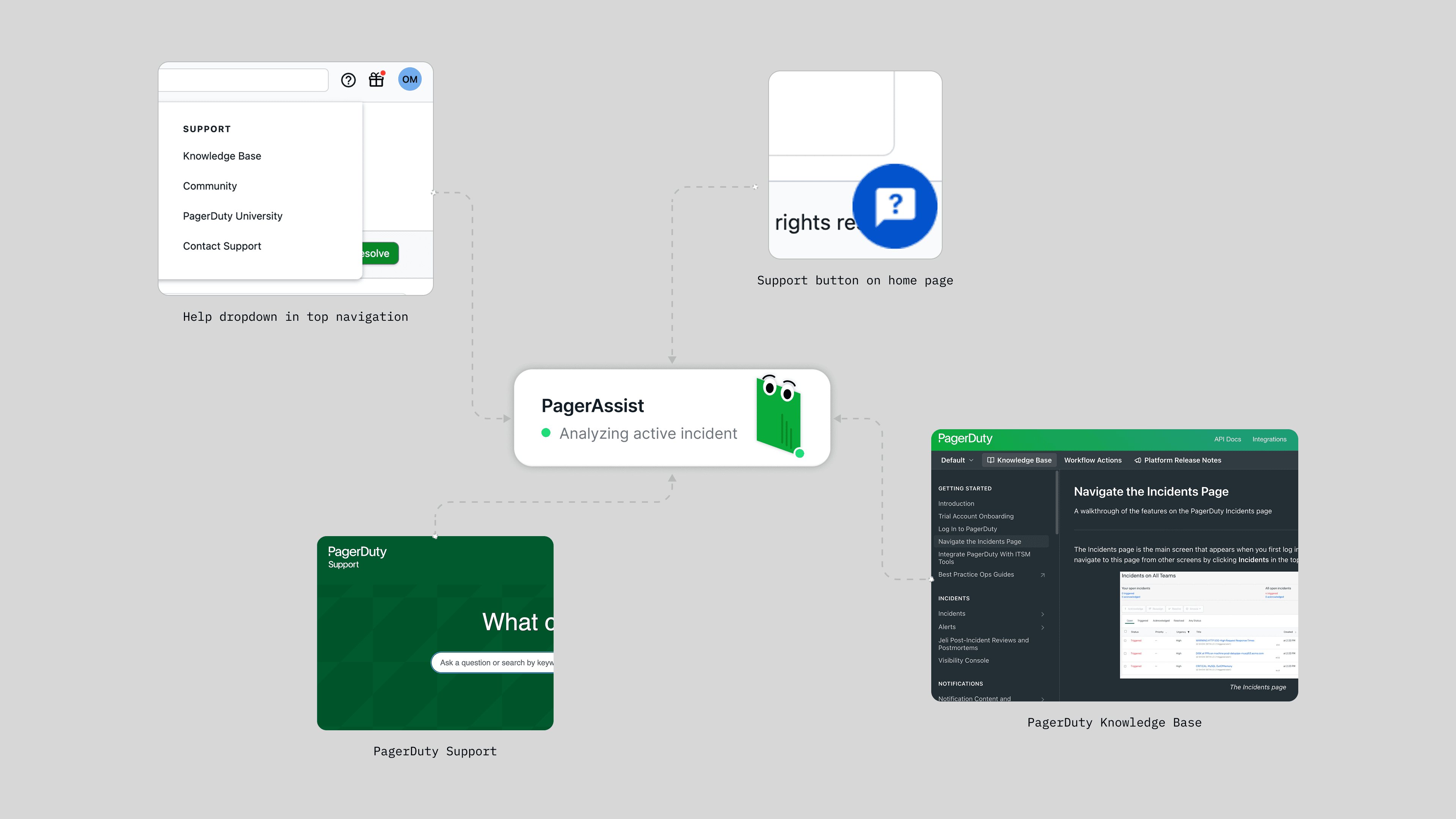
PagerDuty’s support system was highly fragmented, existing through a nav dropdown with multiple options and an external support page and knowledge base, with no way to get contextual, intelligent assistance during an active incident.
How
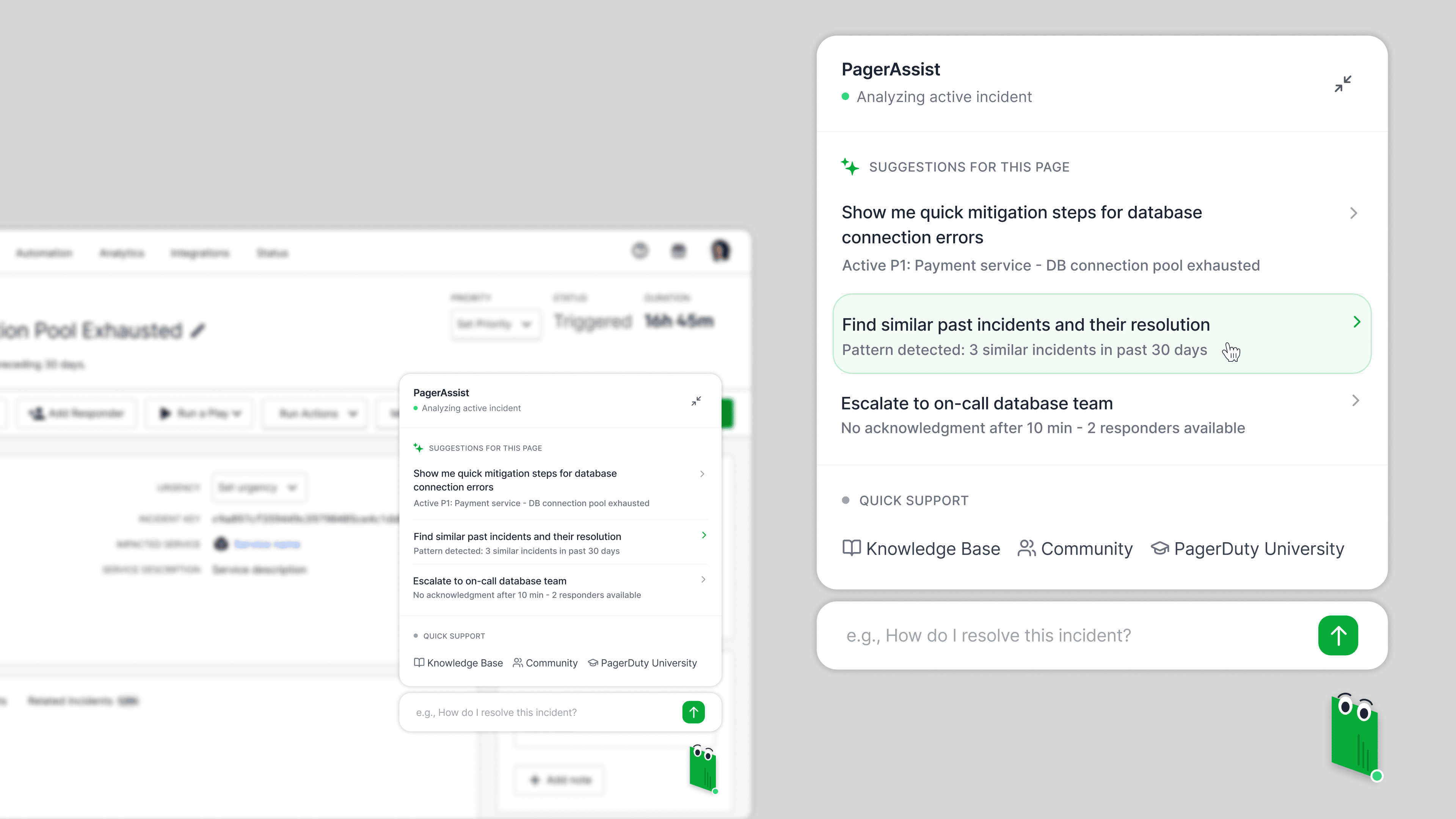
A conversational AI layer that sits on top of PagerDuty, aware of the page you’re on and the incident you’re responding to. It surfaces relevant suggestions, retrieves past incidents, drafts status updates, and more contextual actions.
Impact
Awarded Best Use of Generative Natural Language AI out of 83 teams • Formation of a 15+ cross-functional team
We began by auditing every existing help touchpoint in the product and considered how an entity that possessed access to all would behave.
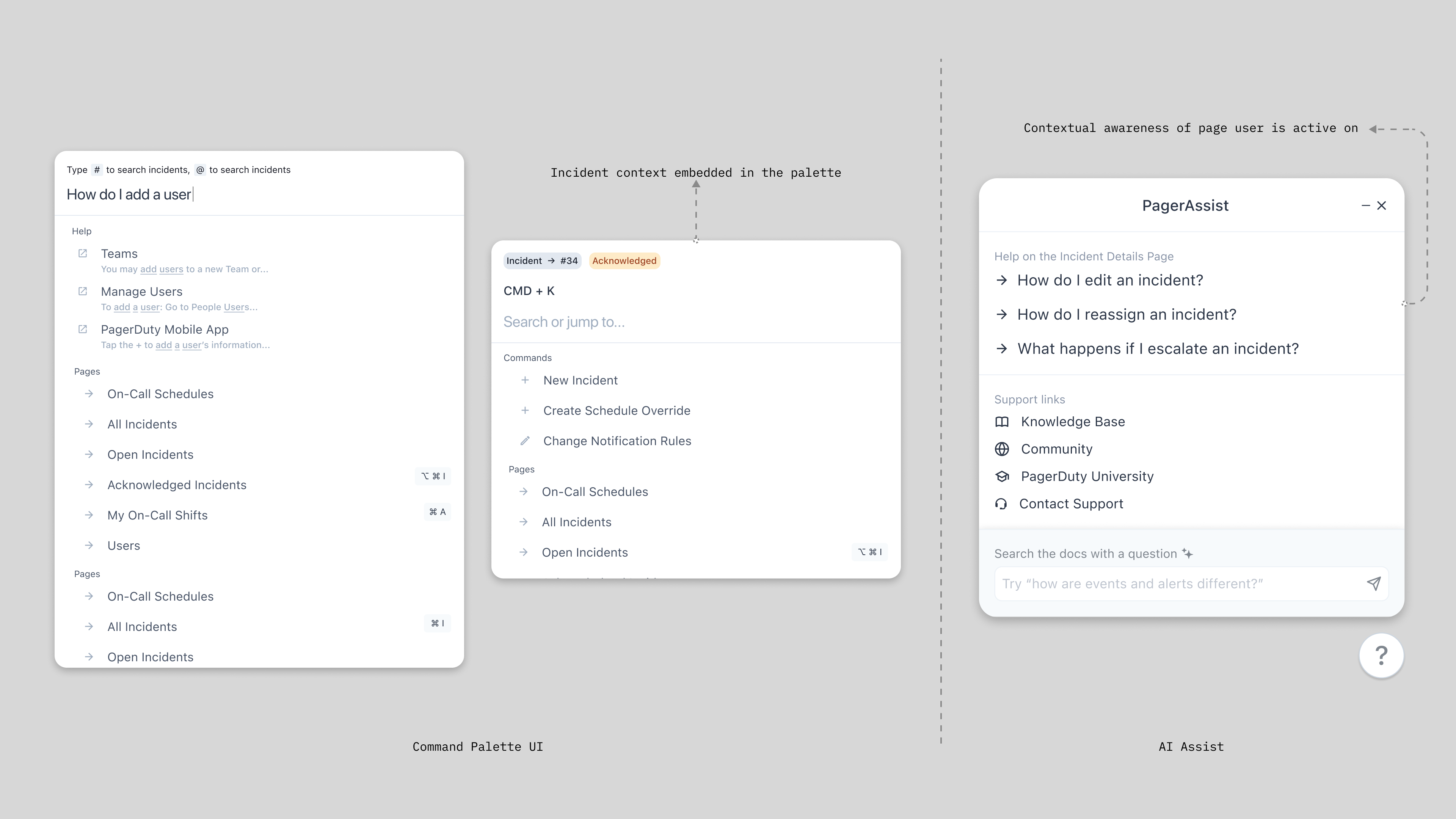
I explored a couple directions for the AI interface based on a command palette from previous, automated work.
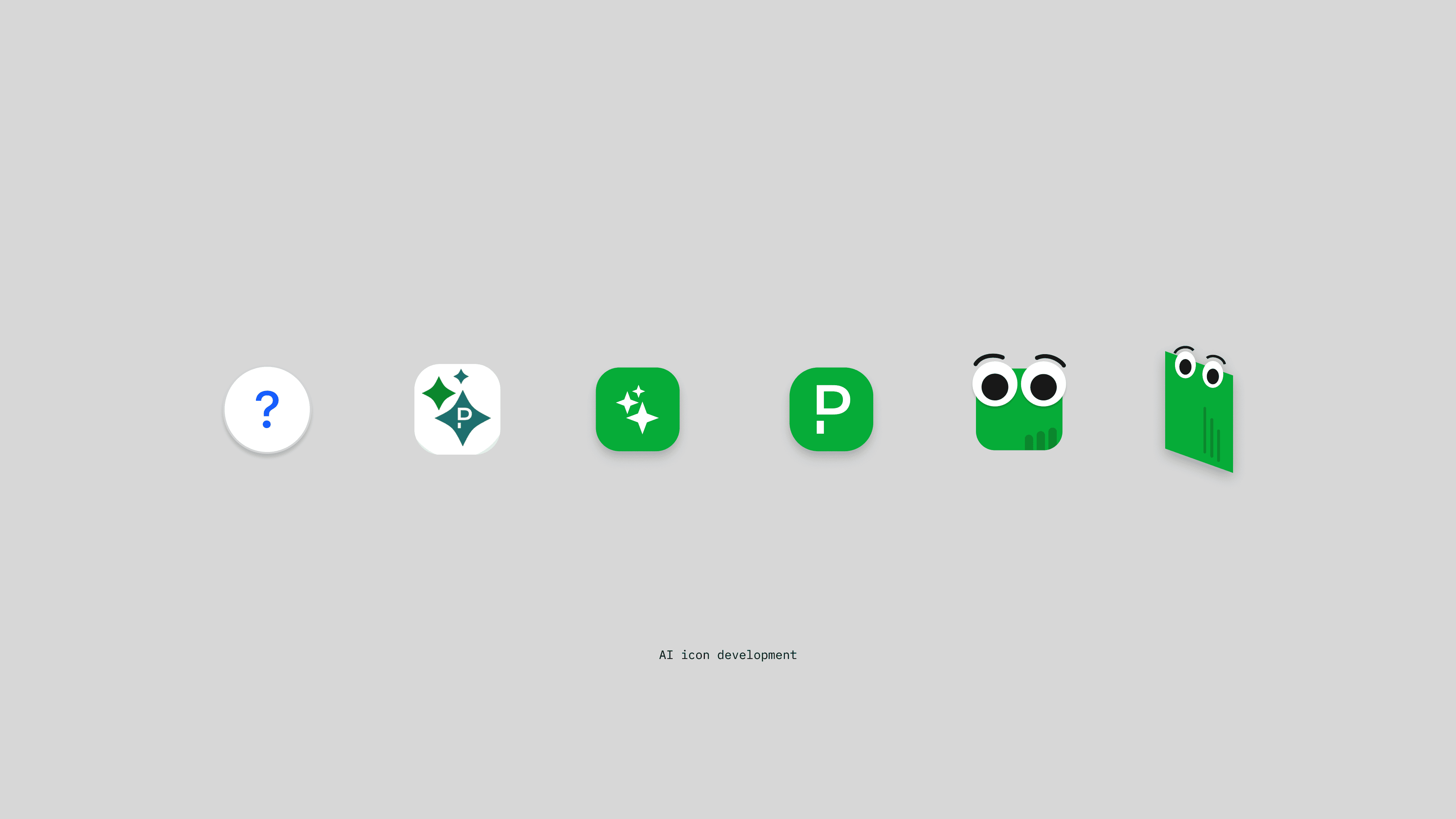
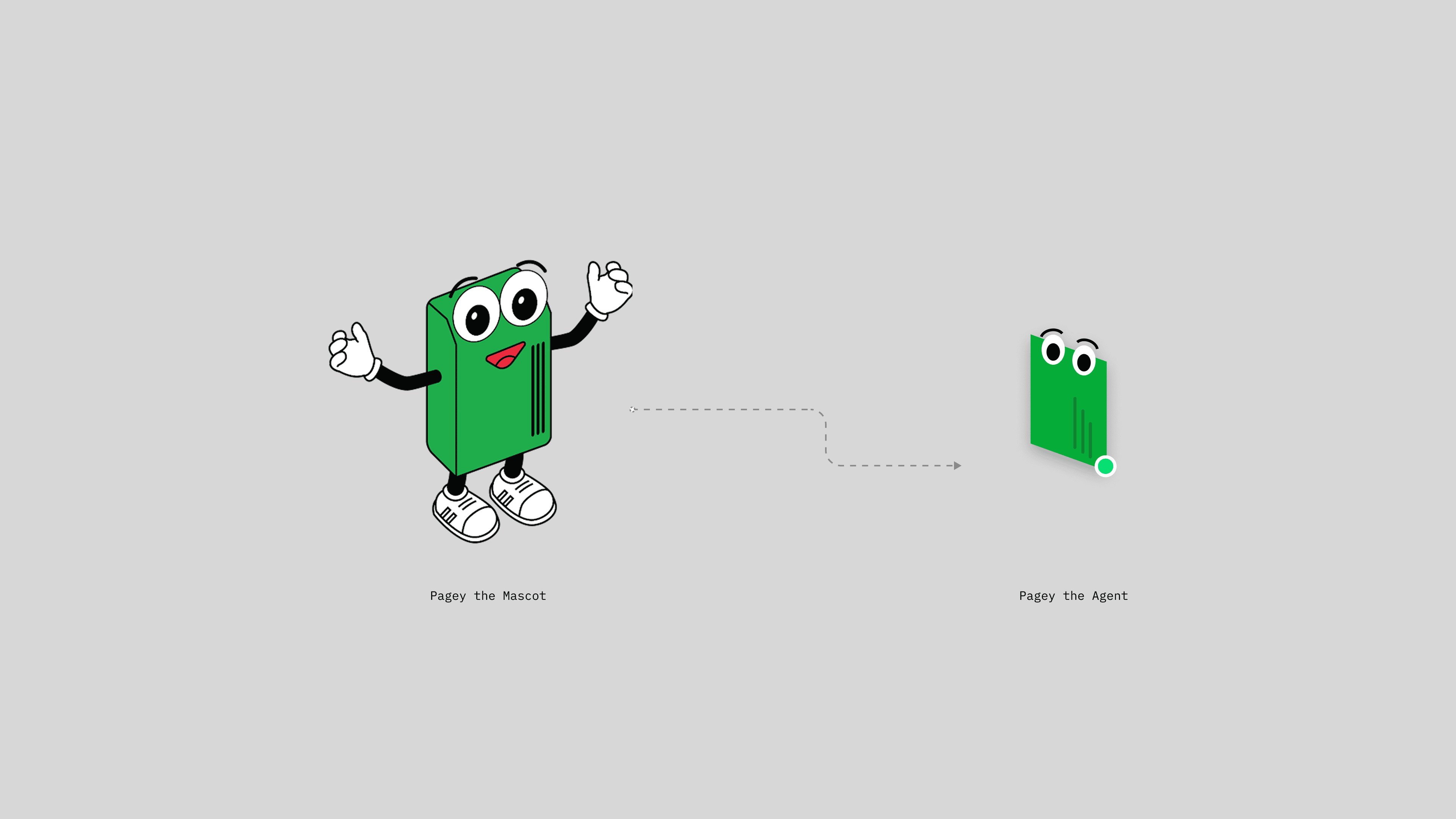
Pagey, the official PagerDuty mascot was reimagined as a persistent AI presence, becoming the literal face of the AI feature.
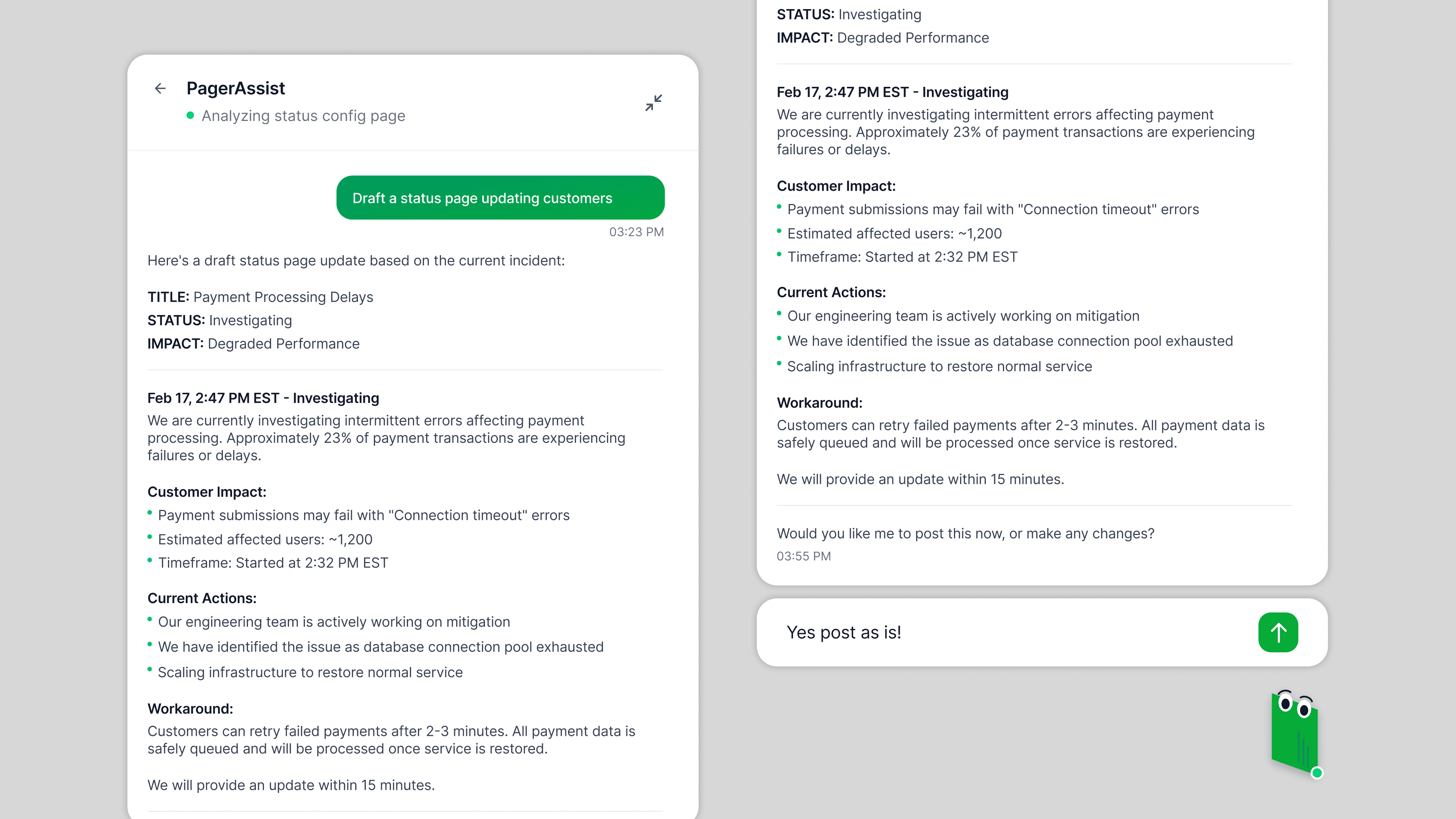
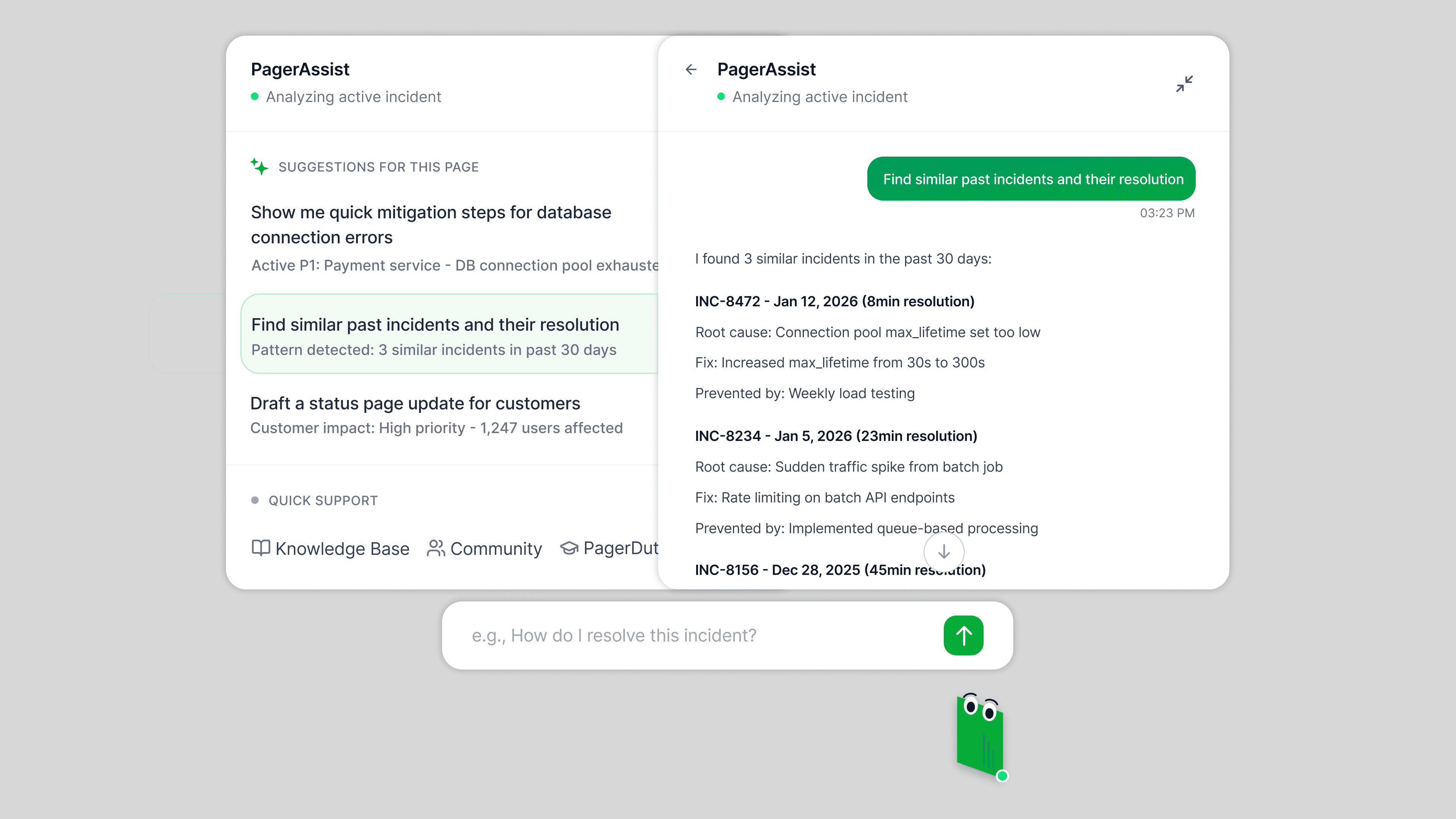
The panel reads the active page the user is on and surfaces ranked, context-aware suggestions based on the data available, not just generic help links.
Selecting a suggestion triggers an immediate response with contextual information.
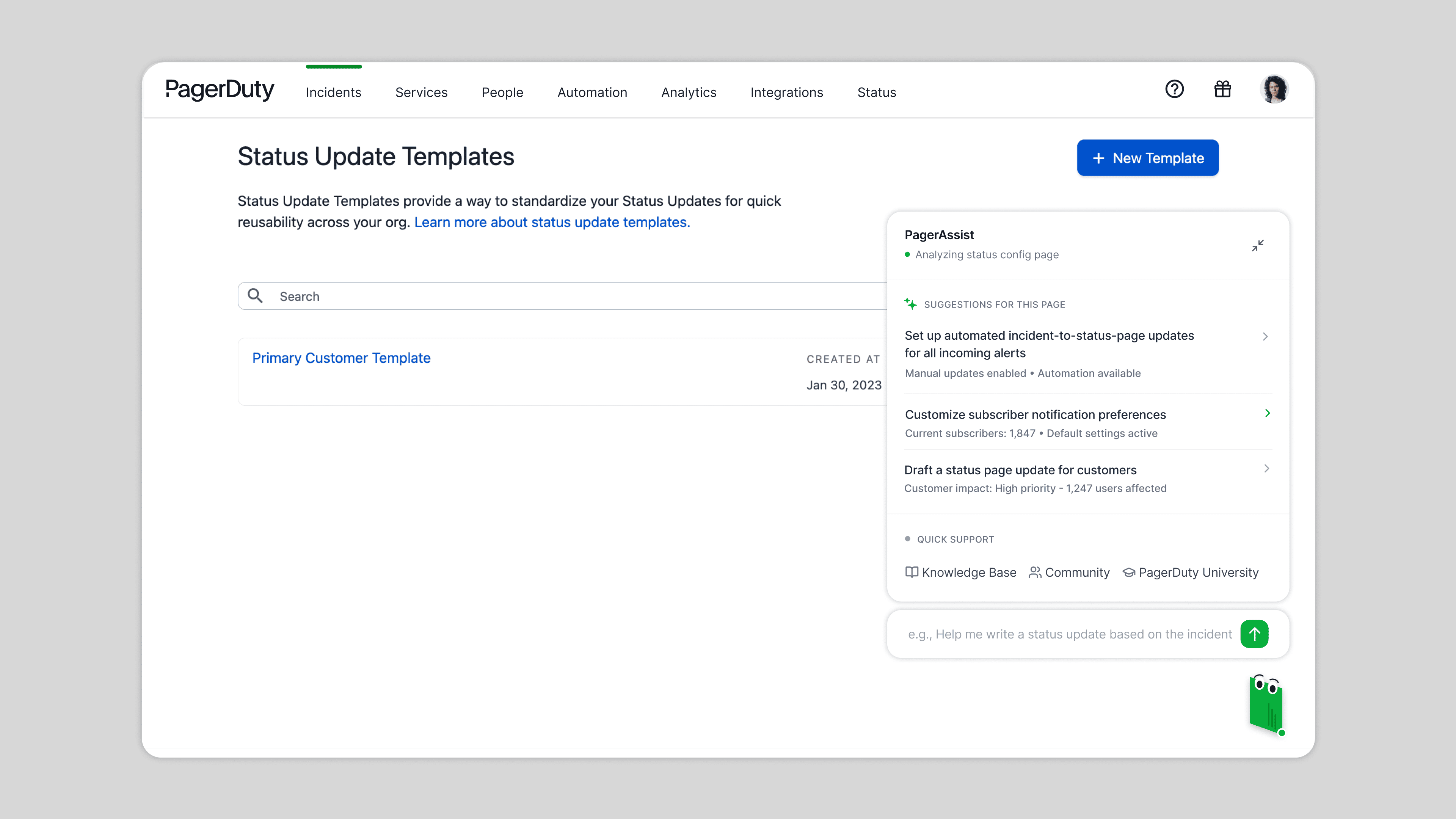
The suggestions adapt to every page — on Status Update Templates, the panel shifts to communication-focused actions.
PagerAssist provides first responders and incident commanders assistance, guidance, and suggestions without ever leaving the PagerDuty territory.