PagerAssist is a hackathon prototype that demonstrated what a conversational AI layer could look like inside PagerDuty — a natural language interface sitting on top of the existing product. It won Best Use of Generative Natural Language AI at PagerDuty's Spring 2023 hackathon out of 83 teams and led to the formation of a 15+ cross-functional team to develop the work further
Impact:Formation of a 15+ cross-functional team • Best Use of Generative Natural Language AI
Collaborators:Max Wollum (Product Manager), Arthur Yidi (Lead Engineer)
Why
PagerDuty’s help system was fragmented — a dropdown, a button that didn’t do anything, a support page, and a knowledge base — with no way to get contextual, intelligent assistance during an active incident.
How
A conversational AI layer that sits on top of PagerDuty, aware of the page you’re on and the incident you’re responding to — surfacing relevant suggestions, retrieving past incidents, and drafting status updates in real time.
Impact
Formation of a 15+ cross-functional team · Best Use of Generative Natural Language AI out of 83 teams
I designed and prototyped a chat-based AI layer for PagerDuty that won Best Use of Generative Natural Language AI at the Spring 2023 hackathon — out of 83 teams formed by 200 Dutonians.
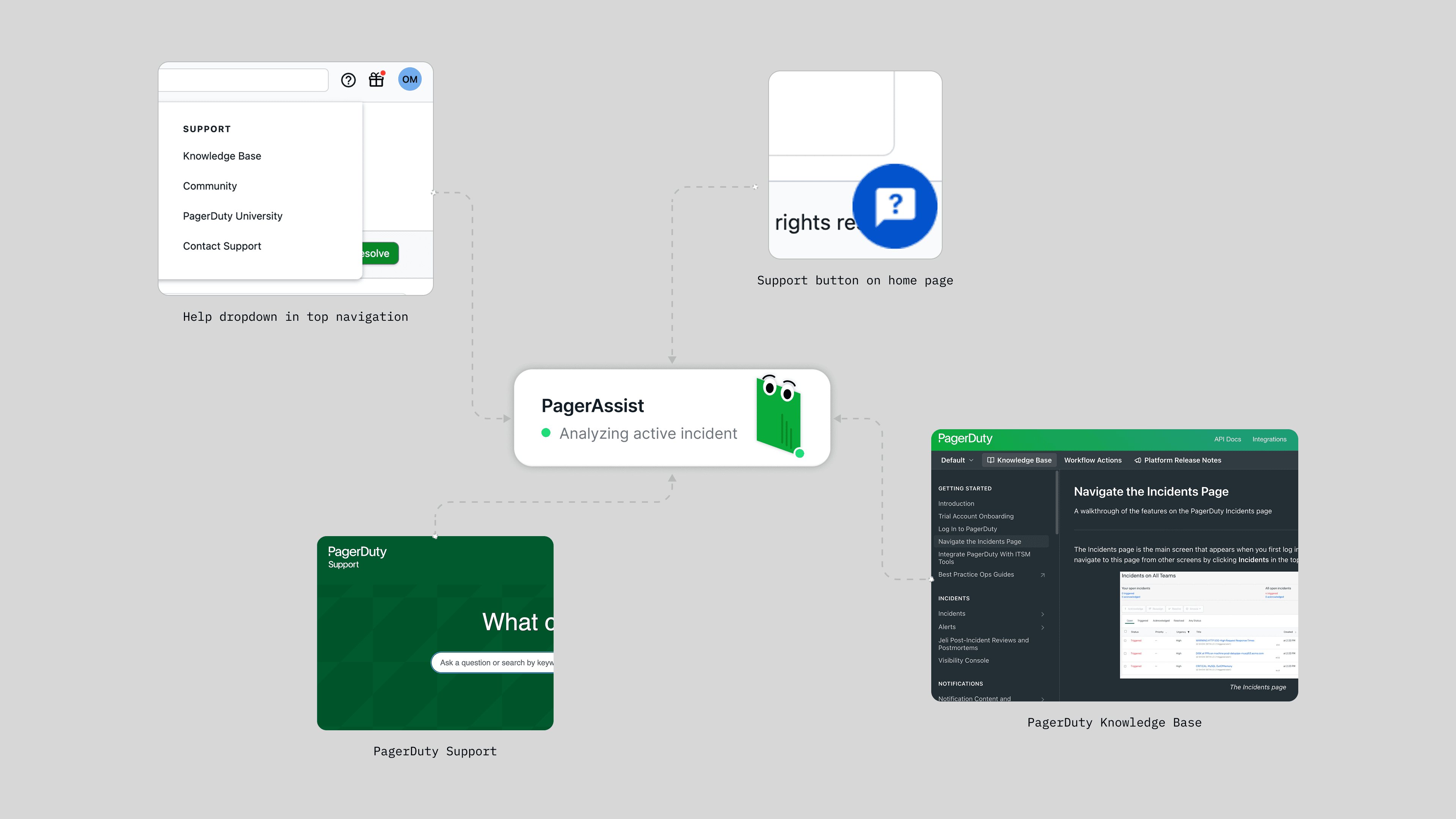
I started by auditing every existing help touchpoint — the help dropdown, the help button, the support page, and the knowledge base.
Four fragmented help entry points mapped radially around a central PagerAssist node — the top-nav help dropdown, a floating support button, the PagerDuty Support page, and the Knowledge Base — showing the disconnected system the AI layer would replace.
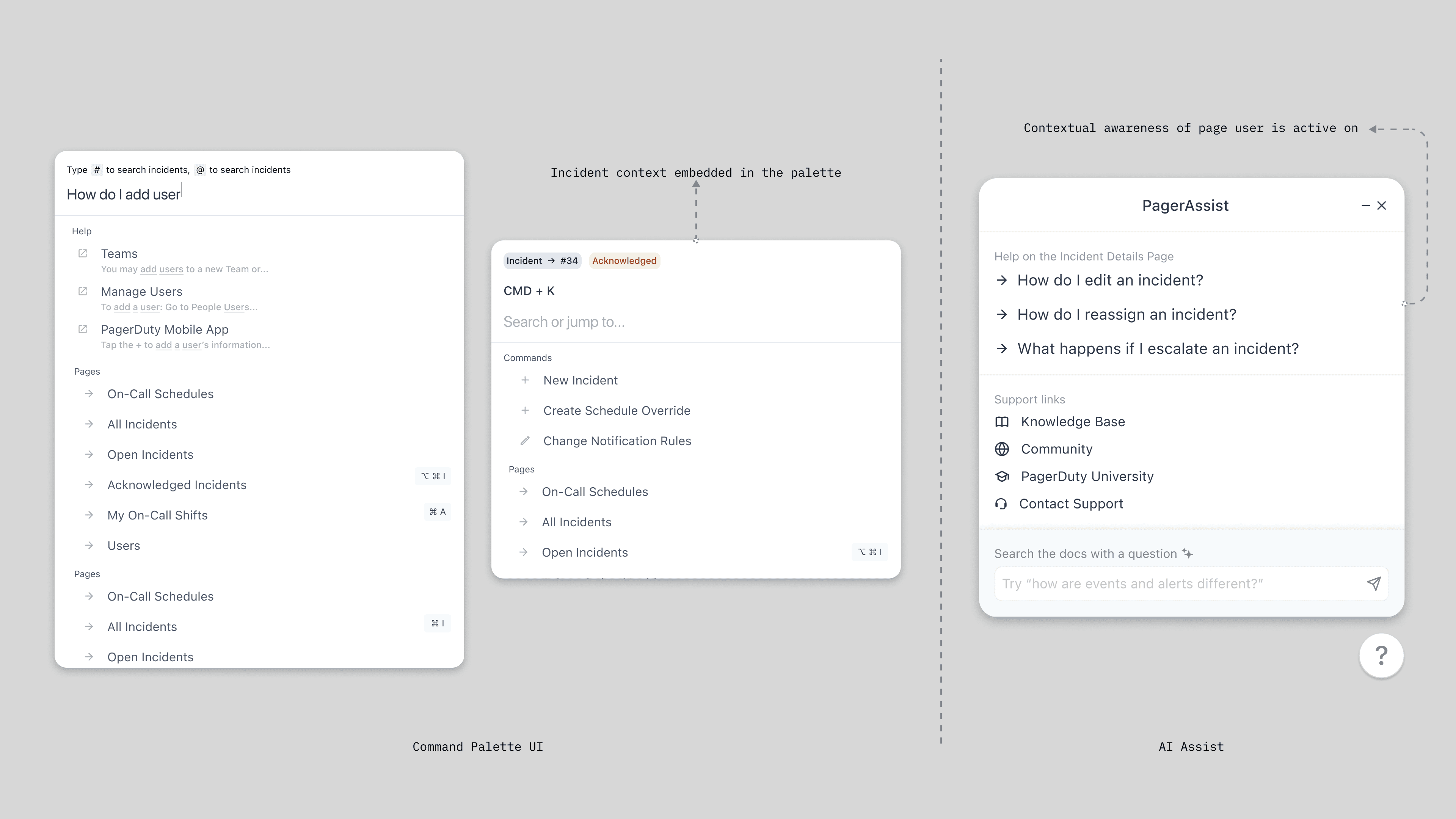
I explored three directions for the AI interface — a command palette, an incident-context palette, and a dedicated AI Assist panel.
Three interface directions side by side — Command Palette with doc search and shortcuts, an incident-aware CMD+K palette, and a dedicated AI Assist panel with context-aware suggestions and a freeform chat prompt.
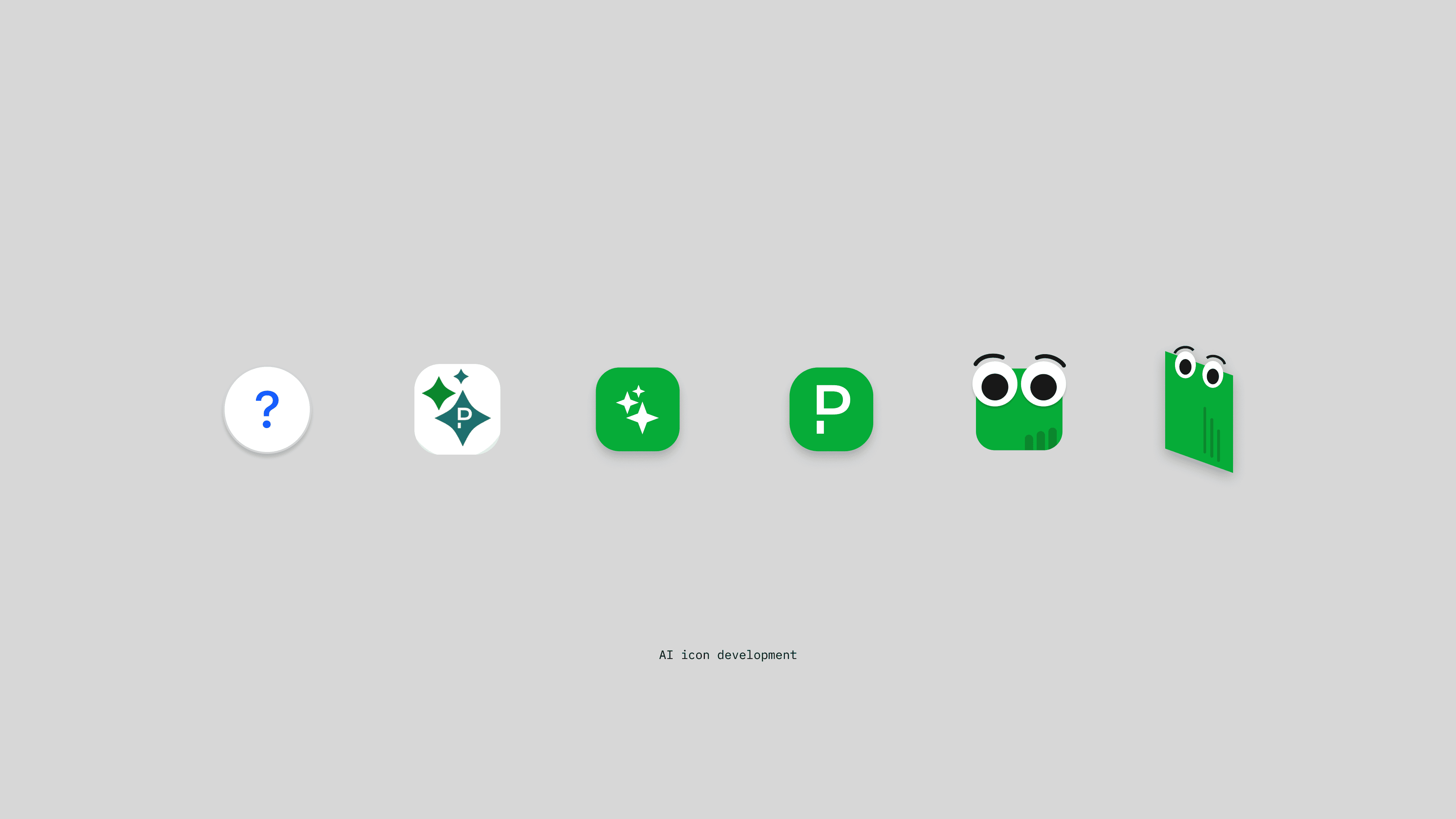
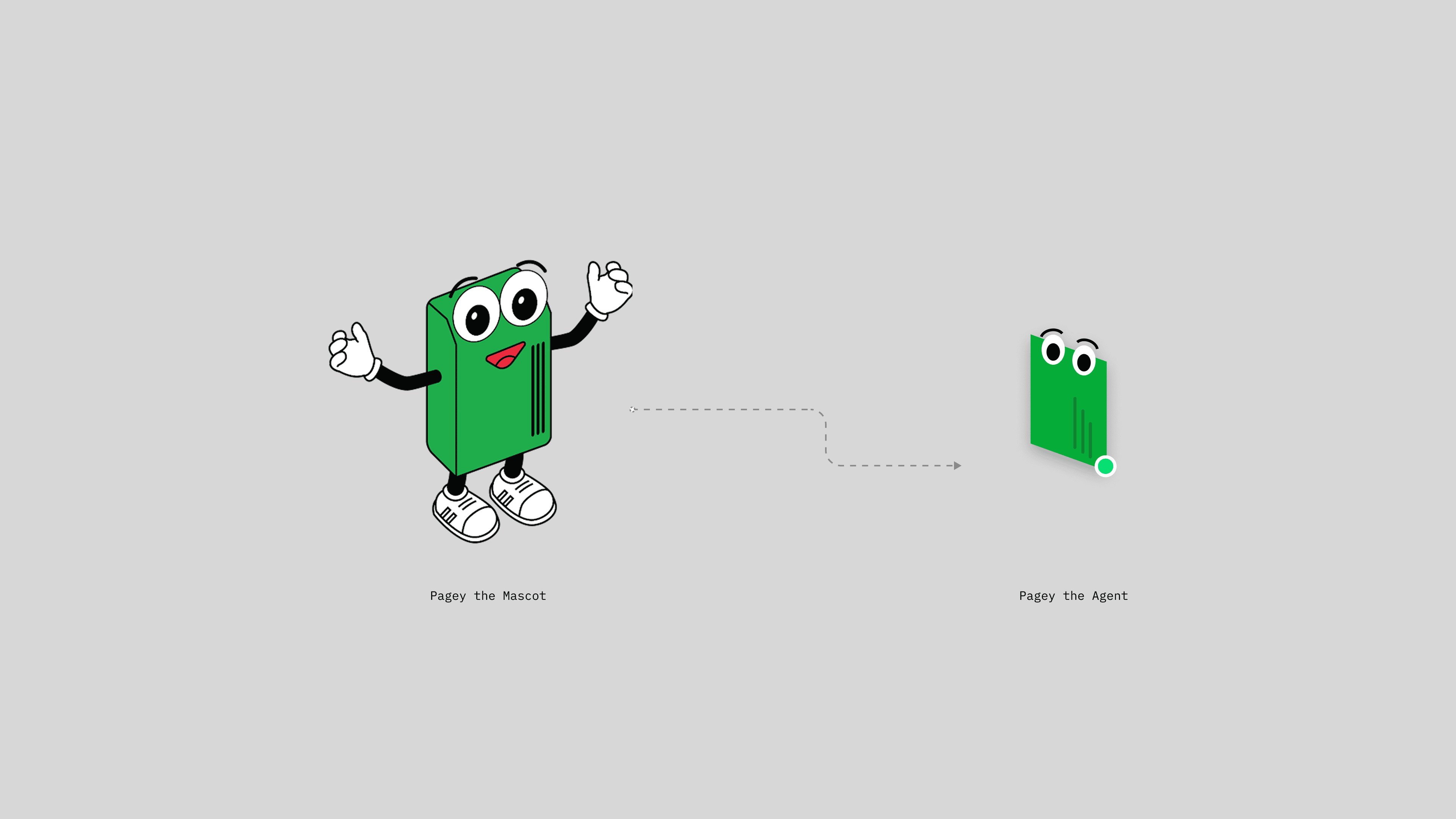
I designed Pagey — the persistent AI presence — from a generic icon to a recognizable, product-native agent character.
Six icon explorations progressing from a plain question mark through sparkle and badge variants to the final Pagey the Agent character: a compact green book with googly eyes used as the AI's persistent in-product avatar.
Character evolution from Pagey the Mascot — PagerDuty's full-body illustrated brand character — to Pagey the Agent: a minimal, compact form with a green presence dot used as the idle-state avatar inside the panel.
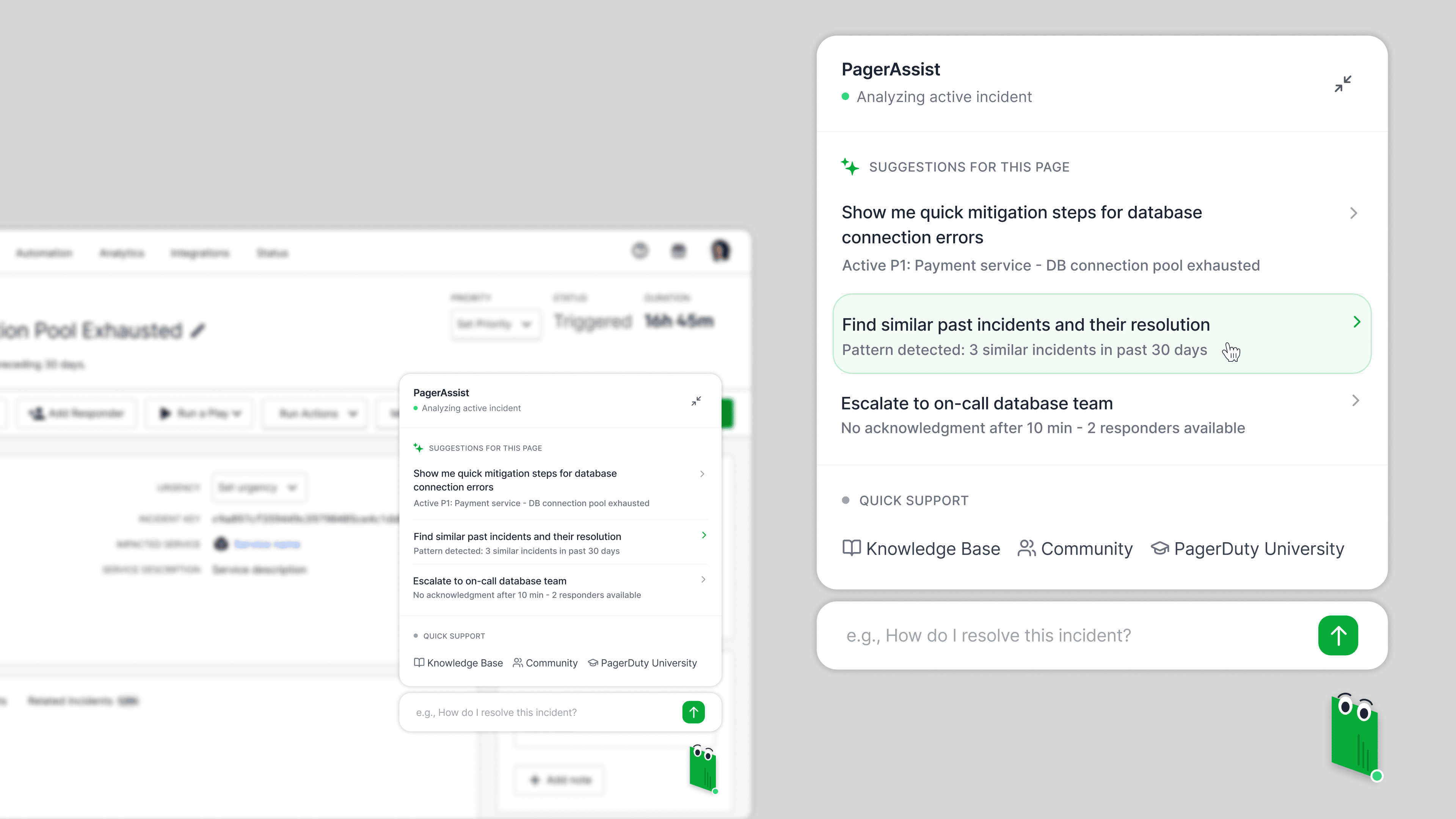
The panel reads the active incident and surfaces ranked, context-aware suggestions — not generic help links.
PagerAssist open on a "DB Connection Pool Exhausted" incident, surfacing three ranked suggestions: mitigation steps, similar past incidents matching a pattern of 3 in the last 30 days, and on-call team escalation.
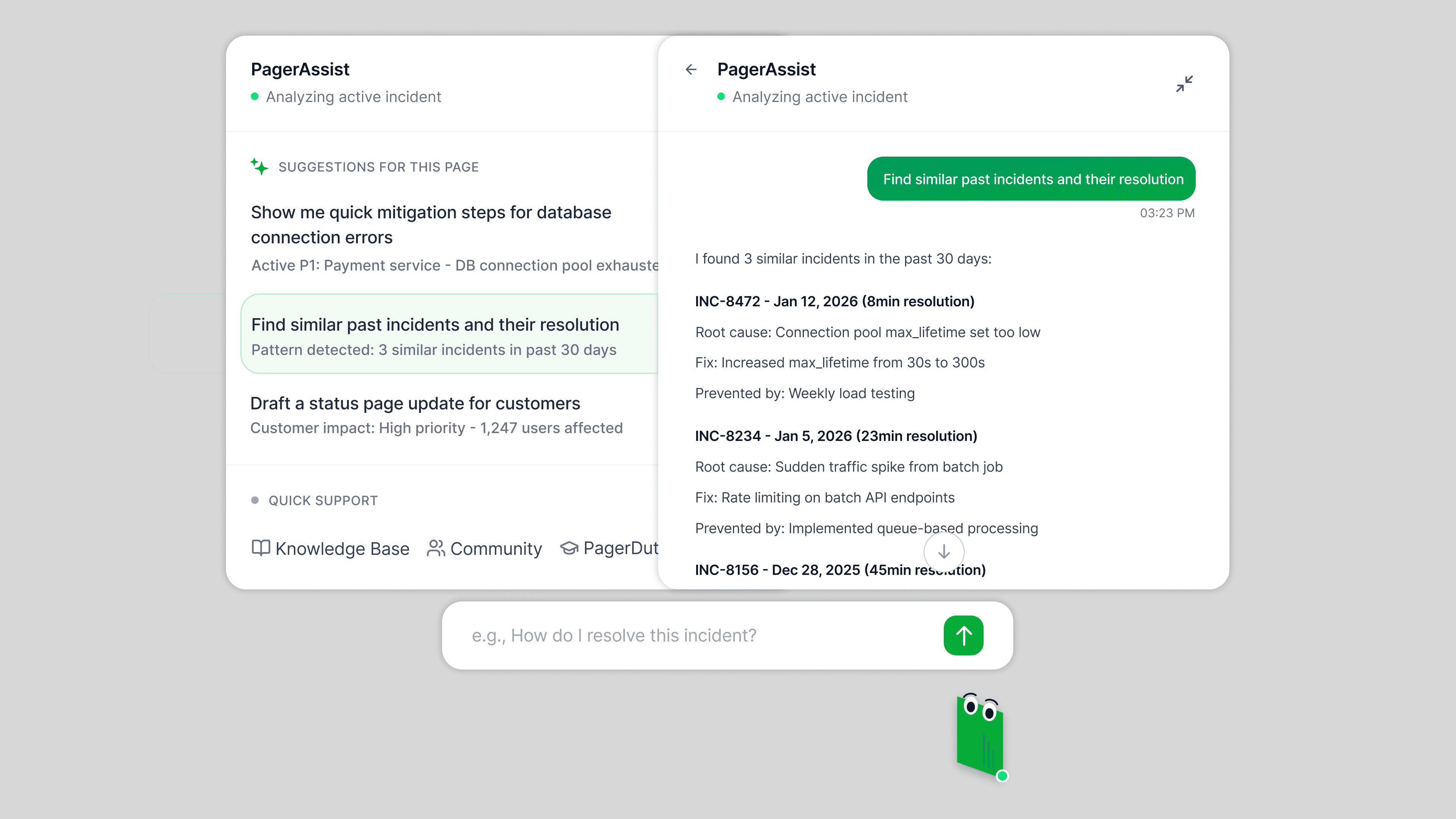
Selecting a suggestion triggers an immediate response — past incidents retrieved, root causes surfaced, fixes listed.
After selecting "Find similar past incidents," PagerAssist returns three matched incidents from the past 30 days, each with root cause, fix applied, and how it was prevented.
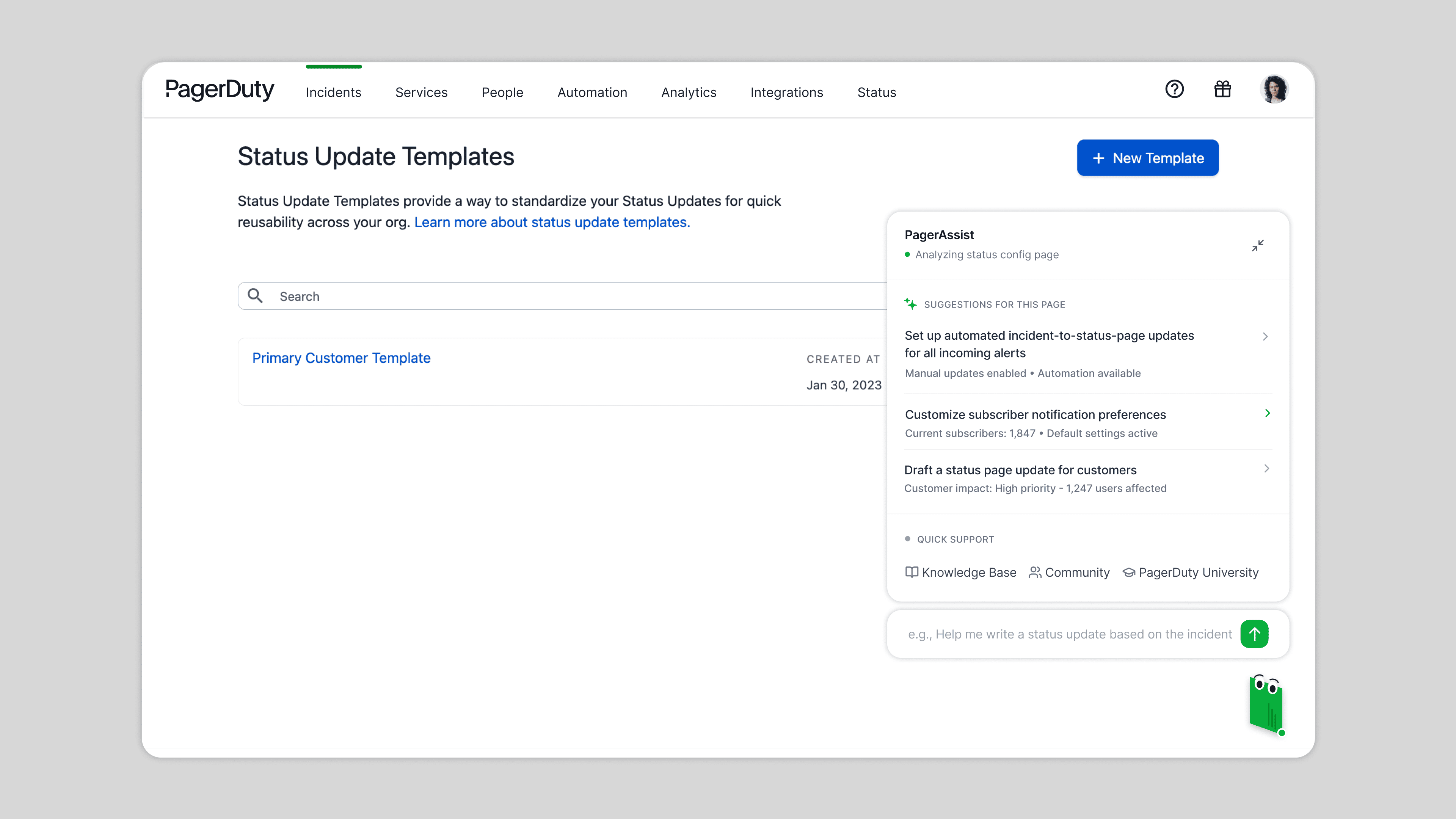
The suggestions adapt to every page — on Status Update Templates, the panel shifts to communication-focused actions.
PagerAssist on the Status Update Templates page, shifting suggestions to automating status updates, customizing subscriber notifications, and drafting customer-facing copy for the active incident.
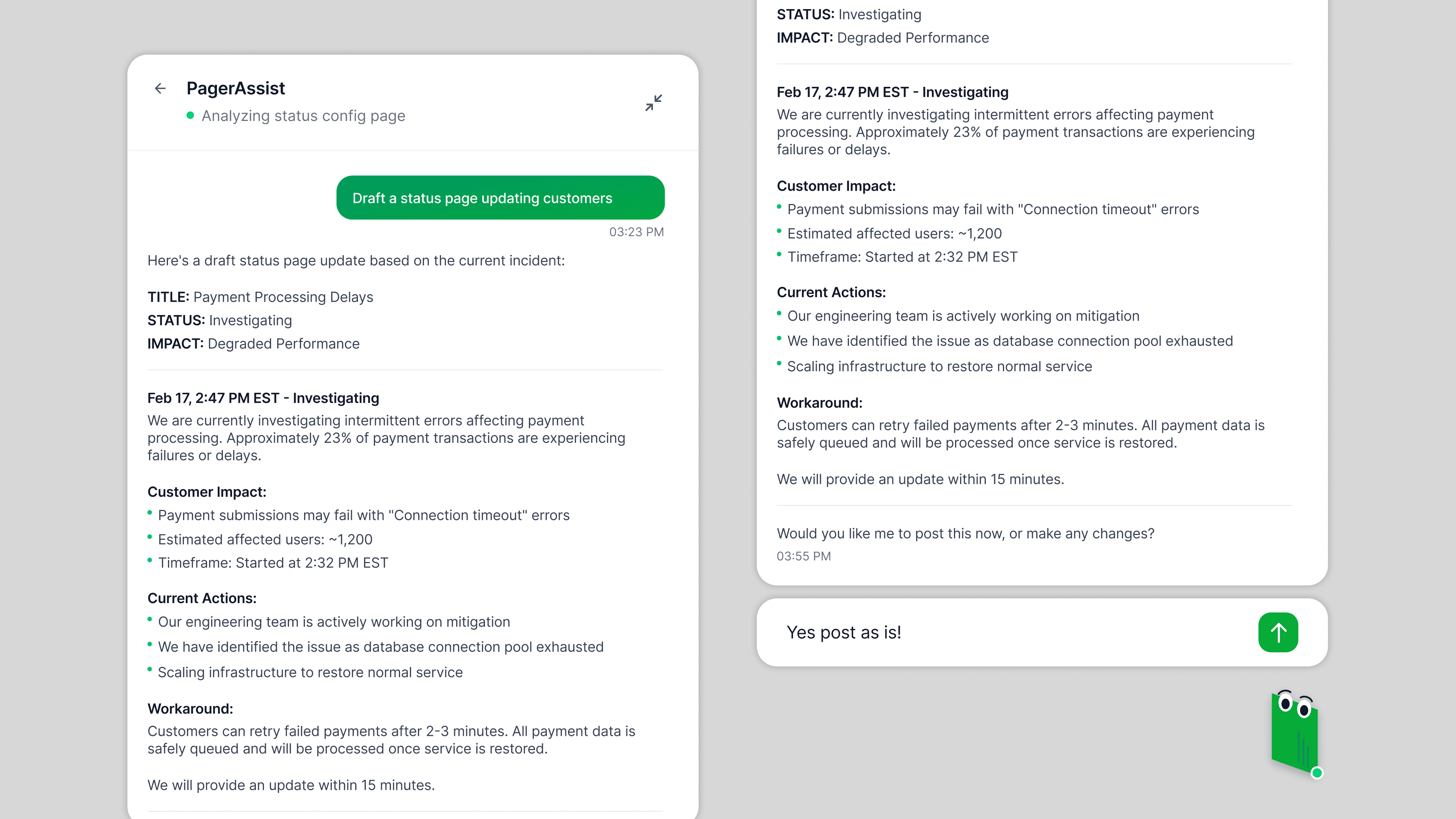
From incident to customer-ready status update — generated, reviewed, and posted without leaving PagerDuty.
PagerAssist drafts a complete status update with title, status, impact, customer-facing language, and current actions — the user replies "Yes post as is!" directly in the chat.
The prototype won Best Use of Generative Natural Language AI out of 83 teams — and led directly to PagerDuty forming a 15+ person cross-functional team to develop the work further.